
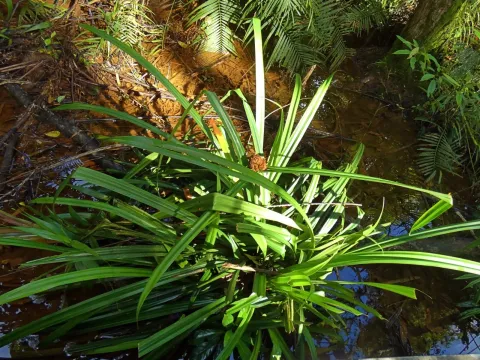
Scirpodendron
Scirpodendron
Scirpodendron is a genus of perennial herbaceous plants belonging to the Cyperaceae family. These plants are native to the tropical regions of Southeast Asia and the Pacific Islands, where they thrive in specific humid environments.
What the section contains

Scirpodendron
The culture requires a consistently warm tropical climate without significant temperature fluctuations. Humidity levels should remain high throughout the year to support vigorous vegetative growth.
Soil requirements involve organic-rich, water-retentive, and well-aerated media. Naturally, these plants are found in swampy forests and along riverbanks, requiring a site that mimics these saturated conditions.
Scirpodendron is characterized by its shade tolerance. When cultivated, it performs best under dappled light or artificial shading, as intense direct sunlight can desiccate the wide leaf blades.
Agricultural management centers on water control. The plant requires constant soil moisture, and irrigation systems must be meticulously managed to prevent both drought stress and soil stagnation.
The economic value of Scirpodendron is primarily derived from its leaves, which provide strong, flexible fibers. These fibers are traditionally used for weaving mats, baskets, and other durable craft items.
Yield capacity is dictated by plant density and moisture availability. Proper plantation management allows for sustainable harvesting of leaves throughout the active growing season.
The harvesting process involves hand-cutting mature leaves, ensuring that the central growth point remains undamaged to promote regeneration of the plant canopy.
Post-harvest treatment involves stripping and drying the fibers to ensure their durability. High-quality fiber is resistant to rotting, which is why it is preferred in tropical craft manufacturing.
Future agricultural improvements aim to standardize fiber length and strength, as well as developing cultivation methods that allow for increased density in managed wetland areas.
Fungal pathogens represent the most significant threat to Scirpodendron, particularly in environments with poor air circulation or stagnant water. Sanitation is crucial to mitigate these risks.
Pest pressure from leaf-eating insects can significantly reduce the quality of harvested fibers. Regular scouting of the leaf surface is necessary to identify infestations early.
Root rot is a common issue when soil drainage is insufficient, even in wetland-adapted species. Proper water movement is essential for plant health.
Integrated Pest Management (IPM) strategies are prioritized, focusing on cultural controls such as spacing and timely removal of diseased or heavily infested foliage.
Chemical intervention is often avoided to maintain the organic integrity of the harvested fiber, as the end products are frequently used for domestic purposes.