
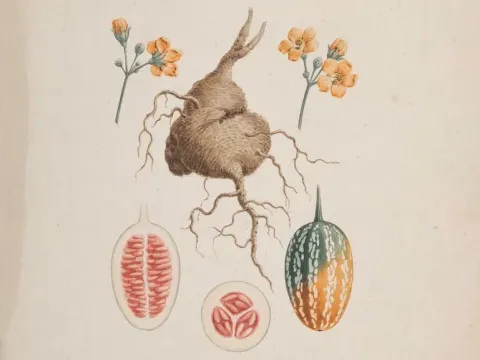
Coccinia abyssinica
Coccinia abyssinica
Coccinia abyssinica is a perennial vine belonging to the Cucurbitaceae family. It is traditionally propagated in the Ethiopian highlands, often timing planting with the onset of the rainy season.
What the section contains
Coccinia abyssinica
Farmers frequently utilize vegetative propagation by planting sections of the tuberous roots, which ensures faster establishment compared to seed sowing.
When starting from seeds, ensure the soil is loose and well-drained, as the seeds require consistent moisture to break dormancy effectively.
The optimal planting density should allow for proper airflow between plants to prevent the spread of foliar diseases during the high-growth phase.
Young seedlings require protection from extreme sun exposure initially, although mature plants are quite resilient and thrive in open, sunny environments.
This crop prefers the temperate conditions typical of tropical high-altitude regions, avoiding extreme cold and prolonged exposure to freezing temperatures.
Well-drained, loamy soils that are rich in organic matter provide the best environment for the development of the tuberous root system.
The plant is highly drought-tolerant once established, thanks to its unique ability to store water and nutrients within its large underground tubers.
Vertical support systems are essential, as the vines require structure to climb, which optimizes their photosynthetic surface area and yield potential.
Regular maintenance, including weeding and keeping the soil surface loose, is crucial during the early stages of growth to eliminate competition for resources.
The primary economic output consists of its large, edible tuberous roots, which are a valuable source of starch and nutrition in local diets.
Yield varies based on the maturity of the plant, as the tubers can continue to grow and increase in mass over several years of cultivation.
Secondary yield includes the tender leaves and shoot tips, which are harvested regularly to be used as a leafy vegetable throughout the growing season.
By implementing proper fertilization and pruning techniques, producers can significantly enhance the quality and size of the root tubers.
Consistent harvest cycles ensure a steady supply of both leafy greens and root vegetables, making the plant a versatile addition to sustainable farming.
Like many Cucurbits, Coccinia abyssinica is susceptible to powdery mildew, especially in environments with high relative humidity and poor ventilation.
Common pests such as aphids and spider mites can attack the foliage, particularly during warmer, drier periods, potentially reducing overall plant vigor.
Root rot is a major threat in waterlogged soils, making proper drainage management the most critical factor for successful cultivation.
Nematodes in the soil can cause significant damage to the root system, stunting growth and reducing the marketable quality of the tubers.
Effective management strategies include crop rotation, the use of disease-resistant planting material, and regular monitoring for early signs of infestation.
The harvesting of tubers typically occurs at the end of the growth cycle when the vine foliage begins to yellow and die back naturally.
Careful excavation using manual tools is necessary to prevent skin damage to the tubers, which helps extend their shelf life and prevent post-harvest decay.
Leaf harvesting is done throughout the growing season, focusing on fresh, healthy shoots to encourage the plant to produce new vegetative growth.
After harvest, tubers should be cleaned of soil, cured in a shaded area, and stored in a cool, dark, and well-ventilated environment.
Maintaining optimal temperature and humidity levels during storage is vital to preserve the nutritional value and texture of the tubers for future consumption.