
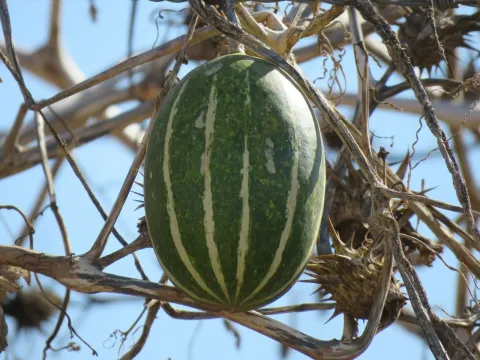
Andre pumpkin
Cucurbita andreana
Cucurbita andreana is a wild species of the Cucurbitaceae family, recognized by botanists as a close relative and potential ancestor of the cultivated Cucurbita maxima. Its native range is primarily located in South America, specifically in parts of Argentina and Uruguay, where it thrives in alluvial soils along river valleys.
What the section contains
Andre pumpkin
Botanically, it is an annual herbaceous vine characterized by vigorous growth habits. The plant produces long, trailing stems equipped with strong tendrils that enable it to climb and expand over large areas, ensuring optimal exposure to sunlight for its foliage.
The leaves are typically cordate with rough textures, and the plant produces large, yellow, monoecious flowers. Cross-pollination is essential for the plant’s reproduction, heavily relying on the activity of local pollinators, particularly bees, which are attracted by the bright colors.
The species requires a warm climate with a long frost-free season to complete its life cycle. It prefers well-drained, nutrient-rich soils but shows remarkable adaptability to various soil structures, provided there is enough moisture during the initial growth stages.
Its evolutionary history in South American scrublands has endowed it with deep root systems capable of extracting moisture from significant depths. This makes it highly drought-tolerant, a trait that is of significant interest to breeders aiming to improve the resilience of commercial pumpkin varieties.
Like many wild Cucurbits, Cucurbita andreana possesses natural defense mechanisms. However, it is susceptible to common diseases such as powdery mildew, especially during periods of high humidity and poor air circulation around the canopy of the plant.
Pests such as melon aphids and spider mites can infest the leaves, causing chlorosis and reduced photosynthetic capacity. In some regions, soil-borne larvae can also cause damage to the root system if the soil remains overly saturated for extended periods.
Proactive management involves ensuring adequate space between plants and avoiding overhead irrigation, which minimizes the conditions favorable for fungal growth. Monitoring for insect presence during the vegetative stage is essential for maintaining plant vigor.
The fruits of this species contain high levels of cucurbitacins, which make them bitter and unpalatable to humans and many mammals. This chemical defense is crucial for protecting the seeds from herbivory until full maturity is reached.
In conservation and research settings, maintaining genetic purity and protecting the species from cross-contamination with commercial cultivars is important, as wild populations often harbor valuable traits that can be lost through uncontrolled hybridization.