
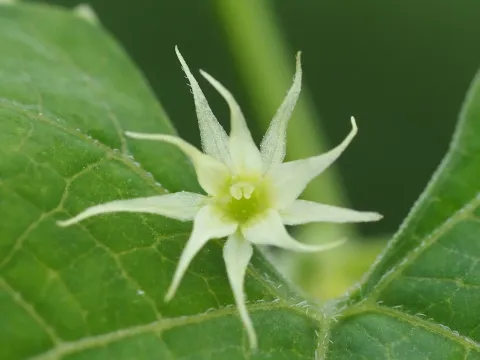
Actinostemma
Actinostemma
Actinostemma is a genus of annual herbaceous climbing plants belonging to the Cucurbitaceae family. Originating from East Asia, these plants typically thrive in moist, shaded environments, including woodland edges and riverbanks, where they can utilize surrounding vegetation for support.
What the section contains

Actinostemma
The seeds of Actinostemma often exhibit a period of dormancy. To achieve successful germination, growers typically employ stratification techniques, keeping seeds in cool, moist conditions for a specific period before sowing them in the soil during the early spring season.
When cultivating Actinostemma as a commercial or hobby crop, sowing should occur after the danger of frost has passed. Soil temperatures should be consistent, ideally above 15 degrees Celsius, to support rapid root development and prevent the rotting of seeds.
Propagation through seedlings started in controlled indoor environments is a highly effective practice. This method ensures that plants reach a vigorous stage before being transplanted into the open field, significantly increasing the survival rate of the crop.
Since the plant is a climber, selecting an appropriate site involves ensuring that there is adequate space and vertical support available. Using trellises or netting allows the plant to stretch out its tendrils, which is essential for healthy canopy development and overall vitality.
Actinostemma requires consistent soil moisture to maintain its rapid growth rate. The soil should be kept uniformly damp, as drought stress during the vegetative phase can lead to stunted growth and poor leaf quality, which reduces the potential value of the harvest.
The ideal soil for this crop is a nutrient-rich, well-draining loam. While the plant appreciates moisture, it is sensitive to waterlogged conditions, which can lead to root diseases. Providing adequate drainage in the plot or using raised beds is a standard requirement.
Temperature management is vital, as this plant is essentially a heat-loving species that performs best between 20 and 28 degrees Celsius. Providing protection, such as tunnels or fleece, can mitigate the risks associated with cold snaps in the early stages of cultivation.
Light levels should be balanced; while Actinostemma can grow in partial shade, exposure to bright, indirect sunlight usually results in better plant health. Excessive direct sun, however, might scorch the foliage unless humidity levels are sufficiently maintained.
Fertilization schedules should focus on organic matter and balanced NPK fertilizers. Early season application of nitrogen helps establish a robust vine structure, while transition to potassium-heavy formulas during the budding stage promotes better flowering and eventual seed production.
The most common pests affecting Actinostemma are spider mites and aphids. These insects thrive in dry environments and are capable of causing significant damage to the leaf surfaces, often leading to discoloration and a decline in the plant's overall photosynthetic ability.
Powdery mildew represents a significant fungal threat, characterized by the appearance of a white, dusty layer on the leaves. This condition is often exacerbated by poor ventilation within the crop canopy or high humidity combined with low airflow between the plants.
Root rot is a critical threat that often arises from over-irrigation or planting in compacted, poorly draining soil. Preventive measures involve site preparation, proper irrigation management, and avoiding the planting of the crop in areas with previous Cucurbitaceae issues.
Integrated pest management strategies are recommended, as they focus on biological control agents such as predatory mites or beneficial fungi. Chemical usage should be restricted, especially if the plant is being harvested for medicinal or culinary purposes, to maintain safety.
Sanitation practices are essential for long-term health. Removing and destroying all infected plant materials at the end of the season prevents pathogens from overwintering in the soil, effectively reducing the risk of recurrence in the following growth cycle.