
Acanthosicyos
Acanthosicyos
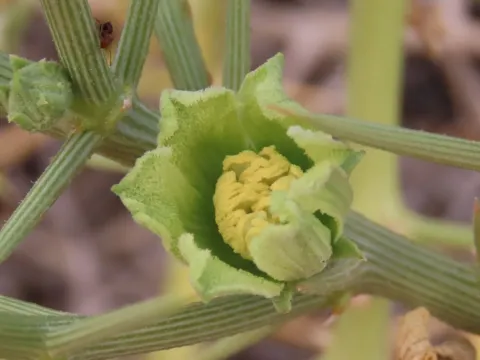
Acanthosicyos horridus, commonly known as the !nara melon, is a leafless shrub native to the Namib Desert. In the wild, seeds germinate only after rare rainfall events that saturate the sand dunes.
What the section contains

Acanthosicyos
For cultivation, seeds should be planted in deep sandy containers to accommodate the rapid development of the long taproot. Proper drainage is essential to mimic the plant's natural habitat.
Scarification of the seeds is recommended to increase germination rates, as the hard seed coat can prevent moisture absorption. A warm environment, consistently above 25°C, is required.
Seedlings develop slowly, focusing energy on root establishment rather than vegetative growth. It is vital to avoid overwatering, as young plants are susceptible to rot.
Agricultural trials suggest that planting in locations with access to deep groundwater or fog-heavy regions yields the best results for crop establishment.
Belonging to the Cucurbitaceae family, Acanthosicyos is an extreme xerophyte perfectly adapted to hyper-arid conditions. It thrives in loose, sandy environments where it forms massive root systems.
The plant requires full sun exposure and can tolerate intense heat. Its leaves have evolved into sharp spines to minimize transpiration and protect the plant from herbivores.
A key biological feature is its reliance on coastal fog for moisture, which is absorbed through its specialized stem structure. This allows the plant to survive without consistent rainfall.
Soil requirements are minimal regarding nutrients, but excellent aeration is non-negotiable. The plant is sensitive to compacted or saline soils that prevent healthy root growth.
Management involves minimal intervention. Protection from shifting sand dunes and grazing animals is often the only maintenance required in large-scale settings.
The yield of Acanthosicyos is highly dependent on environmental factors, particularly fog frequency. In good years, a mature bush can produce a significant number of melon-like fruits.
Each fruit is a thorny, heavy berry that contains numerous nutritious seeds. These seeds are the primary harvestable product, prized for their high oil and protein content.
Manual harvesting is necessary due to the plant's dense network of spines. Workers must use protective gear to safely reach the fruits concealed within the shrub.
While yields per acre may be lower than domesticated melons, the !nara provides a reliable crop in desert regions where other plants would fail to survive.
Quality control during harvest involves selecting fruits that show signs of ripeness, such as a paler skin color, which indicates that the seeds inside are mature.
Fungal pathogens represent the main threat to Acanthosicyos, particularly when excessive soil moisture persists for long periods. Root rot is a common issue in poorly drained settings.
While the plant is hardy, pests like aphids or spider mites can occasionally affect growth in greenhouse conditions. However, the plant's tough exterior usually prevents severe damage.
Wildlife, including gemsbok and various rodents, pose a challenge by consuming fruits. Fencing and protective cages are recommended to ensure the harvest remains for human use.
The plant is highly resilient to desert storms, although sandblasting can cause superficial damage to the stems. Recovery is usually rapid due to the plant's efficient resource allocation.
Chemical control is rarely utilized, as this plant is essentially semi-wild. Maintaining natural ecological balance is sufficient for preventing widespread disease outbreaks.
Harvesting usually occurs throughout the ripening season. The fruits are collected as they reach maturity, ensuring that the nutrient density of the seeds is at its peak.
Processing involves extracting the seeds from the fibrous, bitter pulp. The pulp is usually discarded or utilized as animal feed in desert communities, while seeds are carefully washed.
Sun-drying is the traditional method for preserving the seeds. This step is critical to prevent mold development and ensures the high-quality oil remains stable during long-term storage.
The extracted oil from !nara seeds is highly valued in culinary and cosmetic industries for its unique fatty acid profile and nutritional benefits.
Proper storage involves cool, dry conditions. When stored correctly, these seeds remain viable and marketable for extended periods, providing food security for local populations.