
Coyote melon
Cucurbita palmata
Description
Growing requirements
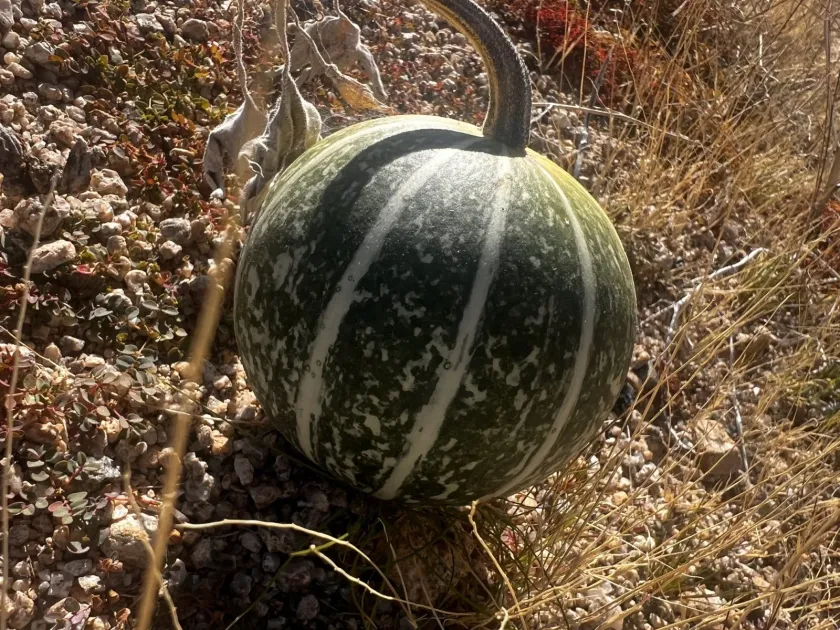
Coyote melon (Cucurbita palmata) belongs to the Cucurbitaceae family. It is a perennial herbaceous vine native to the arid regions of the southwestern United States and northwestern Mexico, well-adapted to extreme desert climates.
The plant is highly specialized for desert survival. It thrives in well-drained, sandy, or rocky soils. Its deep taproot system allows it to reach water reserves that are inaccessible to many other plant species in its habitat.
Botanically, Cucurbita palmata is distinguished by its palmately lobed leaves covered with stiff hairs. These trichomes serve to reflect intense sunlight and reduce transpiration rates, helping the vine survive high heat during the day.
Cultivation requirements are strict: the plant requires full sun exposure and very low relative humidity. It cannot tolerate waterlogging or heavy, clay-based soils, which lead to root asphyxiation and rapid fungal decay.
While not a major commercial food crop, its potential lies in genetic research. Breeders explore its wild DNA to improve the drought resistance and salt tolerance of common cultivated squashes.
Main diseases and pests
Powdery mildew represents the primary threat to this species when it is moved out of its natural, extremely dry habitat. High humidity and poor air circulation are the main environmental triggers for this disease.
Root rot is common when cultivation practices involve excessive irrigation. The plant is evolutionarily programmed for a dry cycle, and any deviation from this can lead to the rapid decline of the root system.
Insects like aphids and spider mites are frequent pests. They thrive on the foliage, and their populations can explode if the plant is stressed by improper environmental conditions in a greenhouse setting.
Root-knot nematodes are another concern for the plant, especially in areas where soil hygiene is not strictly maintained, potentially stunting the growth and reducing the plant's overall vigor.
Effective management includes maintaining a dry growing environment, ensuring excellent drainage, and monitoring the leaves frequently for the early signs of pest infestation or fungal spread.