
Cucumis ficifolius and Cucumis myriocarpus hybrids
hybrids between Cucumis ficifolius and Cucumis myriocarpus Naudin
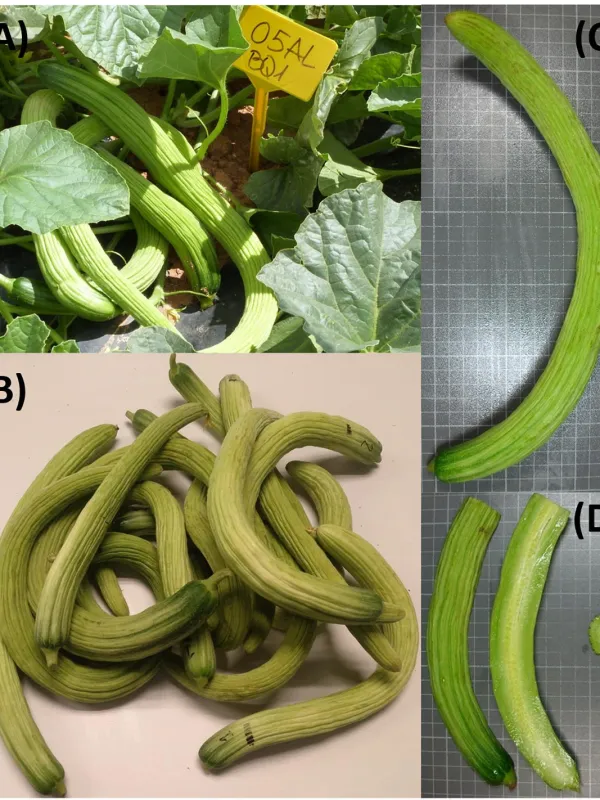
Description
Sowing dates
The sowing dates for these hybrid lines are determined by local climate and specific breeding research objectives. In controlled environment agriculture, sowing can occur year-round, while outdoors, it requires stable soil temperatures of at least 18–20 degrees Celsius.
For scientific purposes, seeds should be scarified or soaked in germination stimulants to improve uniformity. Seeds are typically sown at a depth of 2–3 centimeters in a loose, well-draining potting medium.
Seedlings emerge optimally at ambient temperatures of 22–25 degrees Celsius. Providing high-intensity artificial or natural light immediately after germination is essential to ensure stocky, healthy plant growth.
Cultivation in individual containers is strongly recommended, as these species have fragile root systems that do not tolerate root disturbance or rough handling during transplantation.
Hardening off the seedlings for at least one week before permanent transplanting is a standard procedure. The ideal transplanting stage is reached when seedlings have developed two true leaves, typically at 25–30 days.
Growing requirements
As members of the Cucurbitaceae family with African ancestral lineages, these hybrids have high thermal requirements. They are sensitive to chilling injuries and perform best in warm, sunny environments.
Well-aerated, fertile, and free-draining soil is a prerequisite for successful cultivation. Maintaining soil pH in the range of 6.0 to 7.0 helps maximize nutrient availability for the growing plants.
Consistent light exposure is critical for the photosynthetic efficiency of these hybrids. Adequate plant spacing is required to ensure optimal light interception and airflow across the canopy to prevent microclimate issues.
Watering should be managed through drip irrigation to ensure moisture reaches the roots without wetting the foliage excessively. Proper moisture control is essential to mitigate the risk of pathogen outbreaks.
Balanced fertilization focusing on potassium and phosphorus is recommended during the flowering and fruit-setting stages. Excessive nitrogen should be avoided as it may lead to vigorous vine growth at the expense of fruit production.
Main diseases and pests
The most significant threats to these hybrids include fungal diseases such as powdery mildew, especially in environments with poor ventilation or high relative humidity.
Viral infections transmitted by aphids can devastate plant populations and interfere with research objectives. Rigorous insect monitoring and integrated pest management are mandatory in a greenhouse setting.
Spider mites are a major concern during dry, hot weather periods. They thrive under such conditions and can severely damage leaves, impacting the overall plant health and metabolic activity.
Root rot, often caused by pathogenic fungi in the soil, occurs when water management is inefficient. Ensuring proper drainage and using pathogen-free media are effective preventive measures.
- Powdery mildew
- Anthracnose
- Aphids
- Spider mites
- Root rot