
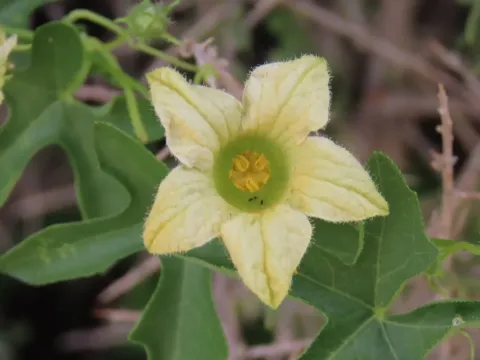
Coccinia rehmannii
Coccinia rehmannii
Coccinia rehmannii is a perennial herbaceous plant belonging to the Cucurbitaceae family. It is native to the arid and semi-arid regions of Southern Africa, where it has evolved to thrive in harsh, water-limited environments.
What the section contains
Coccinia rehmannii
The plant is biologically distinguished by its thickened tuberous roots, which act as vital storage organs for water and nutrients. These adaptations allow the plant to survive extended drought conditions that would be lethal to more demanding vegetable crops.
Cultivation requires well-draining soil types, specifically sandy or loamy textures, to prevent root rot. Proper aeration of the substrate is critical, as the roots are highly susceptible to hypoxic conditions caused by waterlogging.
Temperature requirements for Coccinia rehmannii are quite high, typically flourishing in warm climates with consistent solar radiation. The plant demonstrates extreme intolerance to frost, necessitating controlled environments or greenhouse protection in non-tropical zones.
Its хозяйственное use ranges from traditional food sources to ornamental or botanical interest, reflecting its role within the biodiversity of the southern African savannahs.
The primary threats to Coccinia rehmannii include powdery mildew and anthracnose, common fungal diseases that can compromise the structural integrity of the plant's foliage.
Pests such as spider mites, aphids, and whiteflies present ongoing challenges, particularly in enclosed growing spaces where natural predator populations are absent.
Root rot, often caused by overwatering or soil-borne pathogens like Pythium and Fusarium, remains the most significant threat to the plant's long-term survival in an agricultural setting.
Nematode infestations can damage the essential tuberous root system, hindering the plant's ability to store reserves and significantly reducing overall crop vigor and fruit set.
Effective management requires a combination of moisture control, regular monitoring for signs of infestation, and the use of targeted biological or chemical control agents when necessary.