
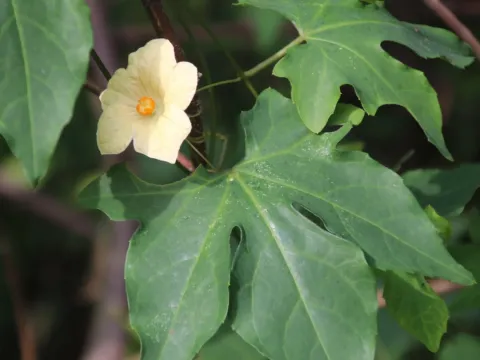
Coccinia palmata
Coccinia palmata
Sowing Coccinia palmata requires warm, frost-free conditions as the plant is highly sensitive to cold temperatures. It is recommended to sow seeds in late spring once the soil has warmed up sufficiently to support germination.
What the section contains
Coccinia palmata
Pre-soaking the seeds in warm water for several hours can significantly improve germination rates. Ensuring the soil is well-drained and kept consistently moist but not waterlogged is critical during the initial growth stage.
Seeds should be sown at a depth of approximately 2 to 3 centimeters in fertile soil. Providing adequate spacing is essential, as the plant develops into a vigorous vine that requires sufficient room for horizontal and vertical expansion.
In regions with shorter growing seasons, starting seeds indoors or in a greenhouse is advised. This allows the plants to establish a robust root system before being transplanted into the final growing site once the danger of frost has passed.
Proper trellis or support structures should be installed at the time of planting. As a climbing vine, Coccinia palmata relies on vertical support to maximize photosynthesis and improve fruit production efficiency.
As a member of the Cucurbitaceae family, Coccinia palmata thrives in tropical and subtropical environments. It requires full sunlight to achieve optimal vegetative growth and to trigger the flowering phase successfully.
The ideal soil is rich in organic matter with a neutral to slightly acidic pH. Good soil structure is vital, as the roots are sensitive to compaction and require consistent oxygen availability to avoid stunted development.
Temperature management is crucial; the plant prefers a range between 22°C and 30°C. Growth slows significantly if temperatures drop below 15°C, making site selection based on heat retention an important agronomic strategy.
Consistent watering is necessary, especially during the fruit-set period. While the plant can handle moderate heat, prolonged drought will lead to flower drop and reduced yields, highlighting the importance of a stable irrigation schedule.
Fertilization should be balanced, with a focus on phosphorus and potassium during the reproductive phase. Organic compost or balanced NPK fertilizers applied periodically will help maintain the plant's vigor throughout the season.
The yield of Coccinia palmata depends heavily on the vine's health and the availability of vertical support. A well-managed plant can provide multiple harvests throughout the season, offering a steady supply of produce.
The fruits are valued for their nutritional content and culinary versatility. They are commonly harvested while still firm and can be used in various recipes, contributing to their potential as a niche market crop for small-scale farmers.
In addition to the fruits, younger leaves and shoots are sometimes consumed as greens. This dual-use approach increases the overall productivity of the crop per square meter of cultivation area.
Advanced farming techniques, such as vertical trellising and pruning of secondary runners, can optimize fruit density and size. These methods reduce the competition for resources within the plant, favoring better fruit maturation.
Regular maintenance, including the removal of dead or unproductive vines, ensures that the plant’s energy is focused on the most productive parts, leading to more reliable and higher-quality harvest outcomes.
Powdery mildew is a common threat in humid conditions, appearing as a white fungal growth on the leaves. Good air circulation is the best preventative measure, supplemented by fungicides if necessary.
Pests such as aphids and spider mites frequently target the succulent undersides of the leaves. These insects weaken the vine by sap-sucking, which can stunt growth and invite viral infections to the plant.
Root rot is a major risk in heavy or waterlogged soils. Ensuring good drainage is the primary defense against the soil-borne pathogens that thrive in wet conditions and attack the root system.
Implementing a strict crop rotation schedule is essential to prevent the buildup of soil-borne diseases. Avoiding sites previously used for other cucurbits helps maintain a cleaner and safer growing environment.
Integrated pest management, including the use of biological controls or targeted sprays, ensures that the crop remains healthy while minimizing the chemical footprint on the edible fruits.
Harvesting should occur when the fruits reach the desired size and color, which indicates peak maturity. Timely harvesting is essential to keep the vine productive and prevent the plant from diverting energy into seed development.
A sharp tool should be used to cut the stems, as pulling the fruit by hand can damage the fragile vine structures. Precision in harvesting minimizes stress on the plant and keeps the foliage intact.
Post-harvest care involves immediate cooling and storage in a cool, dry place. Since the fruits are perishable, they should be processed or marketed within a short timeframe to ensure optimal freshness.
Frequency of harvest typically ranges from twice to three times a week during the peak season. Consistent picking is the most effective way to stimulate the continued production of new fruits from the vine.
Grading and sorting after the harvest is vital for quality control. Removing damaged or overripe specimens ensures that the marketed product meets high standards and maintains its shelf life during distribution.