
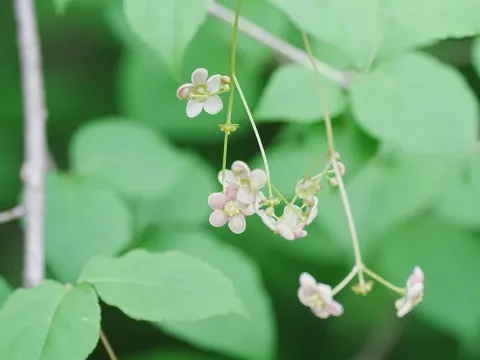
Sharp-leaf spindle
Euonymus oxyphyllus
Euonymus oxyphyllus, commonly known as the sharp-leaf spindle, is a deciduous shrub or small tree belonging to the Celastraceae family. It is native to the temperate regions of East Asia, primarily found in the understories of mixed forests in Japan, Korea, and parts of China.
What the section contains
Sharp-leaf spindle
The plant is distinguished by its sharp-tipped leaves and small, delicate red flowers that appear in spring. Its primary agricultural and ornamental value lies in its vibrant foliage, which turns into striking shades of red and bronze during the autumn season.
Successful cultivation requires soil that is rich in organic matter, moist, and well-drained. The sharp-leaf spindle thrives best in slightly acidic to neutral soil types. It is important to ensure the planting site is not prone to waterlogging, as the root system is sensitive to prolonged anaerobic conditions.
Regarding climate, the plant is adaptable to various temperate conditions but prefers locations with partial shade. While it can withstand periods of sun exposure, excessive direct heat can cause leaf scorch, particularly in younger specimens that have not yet established a deep root system.
Agricultural management involves regular mulching with organic compost to retain soil moisture and regulate ground temperature. Pruning is essential for maintaining the desired shape and should be carried out during the dormant season to encourage vigorous spring growth.
The sharp-leaf spindle is susceptible to various pests, with the spindle ermine moth being the most notable. The larvae of this moth can cause severe defoliation, stripping branches of their foliage if the population is left unchecked during the peak of the growing season.
Spider mites are another frequent problem, especially in hot and dry climates. They feed on the sap of the leaves, causing a stippled appearance and eventual wilting. High humidity and regular overhead watering can often help deter these pests from settling on the foliage.
Powdery mildew is the most common fungal disease, typically manifesting as a white, dusty layer on the leaf surfaces. It is most prevalent in areas with poor air circulation or consistently high humidity levels throughout the late spring and summer months.
Anthracnose can also affect the plant, causing dark, irregular spots on leaves and stems. This disease is favored by wet, cool spring conditions. Removing infected debris from the base of the plant is a critical step in reducing the spread of fungal spores for the following year.
Management strategies involve a combination of cultural practices, such as proper spacing to ensure airflow, and chemical treatments when necessary. Integrated Pest Management (IPM) is recommended to maintain the long-term health and aesthetic value of the shrub.