
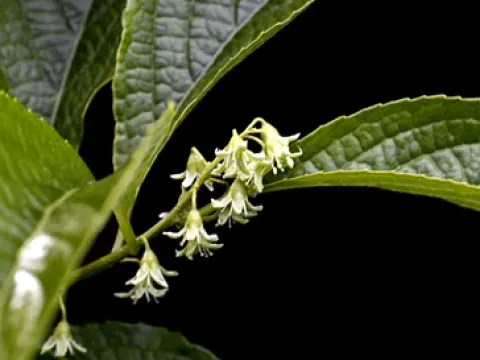
Rugose staff vine
Celastrus rugosus
The rugose staff vine (Celastrus rugosus) belongs to the Celastraceae family. In nursery settings, this crop is primarily propagated through seeds or vegetative methods, specifically using green cuttings during the active growing season.
What the section contains
Rugose staff vine
Seeds require a period of stratification at low temperatures for 2–3 months to break dormancy and ensure high germination rates. Sowing in open ground should occur in mid-spring, once the soil has warmed sufficiently to support early root development.
Vegetative propagation involves taking semi-hardwood cuttings in June. These are rooted in a light, well-draining substrate under controlled humidity conditions, such as a cold frame or greenhouse, to prevent dehydration before roots form.
Starting plants in containers is a common practice that allows for better root ball development before final field planting. Transplanting is most successful in early spring or autumn, providing the vine with ample time to establish in its permanent location.
Proper spacing is crucial for the rugose staff vine, as it is an aggressive grower. Depending on the intended landscaping goal, plants should be placed at least 1.5 to 2 meters apart to avoid overcrowding and resource competition.
This species thrives in sunny to partial shade locations. While it exhibits tolerance to varied light conditions, optimal foliage density and overall vigor are achieved when the plant receives several hours of direct sunlight daily.
Celastrus rugosus prefers fertile, loose, and well-draining soil. It is highly sensitive to waterlogged conditions, making adequate drainage a mandatory requirement for planting sites to prevent root rot and physiological stress.
Regarding climate, the plant is relatively resilient but may need winter protection in regions prone to extreme frost. Applying a layer of mulch around the base of the stem helps stabilize soil temperature and conserve essential soil moisture.
Watering management is vital, especially during the first two years after planting. Once established, the vine develops a deep root system that increases its drought resistance, though supplemental watering during prolonged dry spells remains beneficial.
Structural support is essential for this vine. Providing sturdy trellises, fences, or pergolas early in the growth process encourages the plant to grow vertically, which improves air circulation and reduces the likelihood of foliage disease.
The primary utility of the rugose staff vine lies in decorative landscaping and environmental engineering. Its rapid growth rate makes it an excellent choice for vertical gardening, providing rapid cover for walls, fences, or large garden structures.
In addition to its aesthetic value, Celastrus rugosus contributes to biodiversity. The fruits serve as a food source for local bird populations, making the plant a valuable addition to naturalistic or ecological garden designs.
The pliable, strong stems of the vine have historically been utilized in crafts and light basketry. This renewable material offers flexibility and durability, highlighting the practical utility of the plant in rural or traditional garden management.
Productivity in terms of growth is high, with some specimens capable of adding substantial length in a single season. This makes it a preferred option for quickly establishing green barriers or shade-providing features in parks and public landscapes.
While not a traditional food crop, the plant’s ability to stabilize soil on slopes and provide habitat for beneficial fauna makes it a highly useful species for land management and sustainable landscaping projects.
Although robust, the rugose staff vine can be affected by fungal pathogens, particularly leaf spot diseases. These usually manifest in environments with high humidity and stagnant air, which promote spore development on the foliage.
Pests such as aphids and spider mites can infest the younger, succulent stems of the plant. These insects sap energy from the host, leading to stunted growth and visible yellowing or curling of the leaves if left unchecked.
Integrated pest management, including regular monitoring and the use of targeted insecticides or horticultural oils, effectively controls pest populations. Preventing infestations is key to maintaining the plant's decorative appeal.
Sanitation is a critical control measure; gardeners should promptly remove and destroy any infected or damaged plant material. This minimizes the risk of pathogens spreading throughout the entire structure of the vine.
Ensuring proper plant vigor through balanced fertilization and maintaining clear spacing between vines significantly enhances the plant's natural ability to resist common diseases, ensuring long-term health and vitality.