
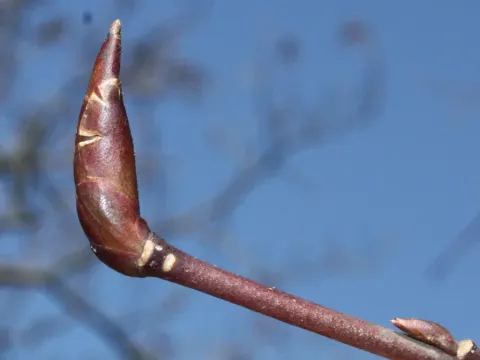
Sanguine spindle
Euonymus sanguineus
The Sanguine spindle (Euonymus sanguineus) is a member of the Celastraceae family. It is a deciduous shrub or small tree that is highly valued for its striking autumnal foliage, which turns a brilliant blood-red color, providing a strong visual impact in the landscape.
What the section contains
Sanguine spindle
Originating from the regions of China, this species thrives in temperate climates. It requires well-drained, fertile soil with a neutral to slightly alkaline pH level to maintain its vigor and promote the development of its distinctively colored foliage.
Regarding site selection, the plant performs best in full sun or light shade. While it has moderate drought tolerance once established, consistent moisture during the early stages of growth significantly enhances the shrub's overall health and development rate.
Cultural practices include periodic soil aeration and mulching, which helps conserve moisture and suppress weeds around the root zone. Regular applications of balanced fertilizers during the spring encourage robust vegetative growth and improve the plant's natural resistance.
This shrub is primarily utilized in horticulture for landscape design, specifically in creating ornamental hedges or acting as a focal point in borders. Its versatility and aesthetic appeal make it a preferred choice for parks and private garden arrangements.
The primary insect threats to Euonymus sanguineus include the spindle ermine moth, which can cause significant defoliation. Timely application of systemic insecticides is recommended to protect the foliage during the larvae's active feeding phase.
Aphids and scale insects represent secondary, yet common, pests that cluster on young shoots. Regular scouting of the canopy allows for quick intervention with horticultural oils or soaps, preventing long-term damage to the plant's structure.
Powdery mildew is the most frequent fungal disease, often triggered by poor ventilation and high humidity. Maintaining adequate spacing between plants and performing selective pruning is essential to improve airflow and reduce fungal pressure.
Root rot can occur in areas with poor drainage or over-irrigation. Ensuring the planting site has adequate water run-off and preventing waterlogging of the root system is crucial for long-term survival in garden conditions.
Integrated pest management, including the removal of infected plant debris in the autumn, is essential for maintaining a healthy environment. By following these agronomic guidelines, the vigor and longevity of the plant are significantly increased.