
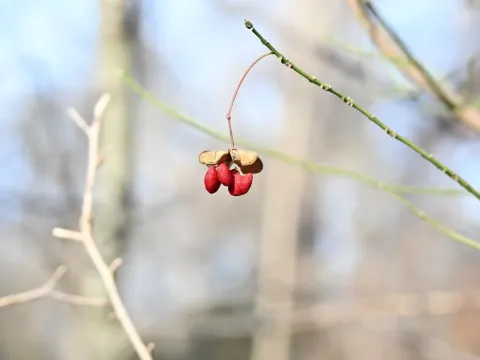
Spindle
Euonymus L.
The Spindle (Euonymus L.) is a genus of flowering plants in the family Celastraceae. It includes a diverse range of deciduous and evergreen shrubs and small trees that are native to regions throughout the Northern Hemisphere, from Europe to East Asia.
What the section contains
 European spindle
Euonymus europaeus L.
European spindle
Euonymus europaeus L.
 Fortune's spindle
Euonymus fortunei (Turcz.) Hand.-Mazz. var. radicans (Siebold ex Miq.) Rehder
Fortune's spindle
Euonymus fortunei (Turcz.) Hand.-Mazz. var. radicans (Siebold ex Miq.) Rehder
 Hamilton's spindle
Euonymus hamiltonianus Wall.
Hamilton's spindle
Euonymus hamiltonianus Wall.
 Japanese spindle
Euonymus japonicus Thunb.
Japanese spindle
Euonymus japonicus Thunb.
 Winged spindle
Euonymus alatus (Thunb.) Siebold
Wintercreeper
Euonymus fortunei (Turcz.) Hand.-Mazz.
Winged spindle
Euonymus alatus (Thunb.) Siebold
Wintercreeper
Euonymus fortunei (Turcz.) Hand.-Mazz.
Spindle
These plants are highly valued in ornamental gardening for their vivid foliage and distinctive fruits. They thrive in a variety of environments, preferring moist, well-drained soils and positions ranging from full sun to partial shade, depending on the specific cultivar.
Proper cultivation requires regular monitoring of soil moisture levels, as the plants do not tolerate waterlogged conditions which often lead to root rot. Fertile, loamy soils provide the best growth results for most species within the genus.
Spindle shrubs are remarkably versatile and respond well to regular pruning. This allows gardeners to shape them into formal hedges, topiary forms, or maintain a healthy, compact natural shape for specimen planting.
Feeding the plants with balanced fertilizers in early spring helps encourage robust growth. In cold climates, providing a layer of mulch around the base of the plant helps protect the root system from extreme temperature fluctuations.
The most common pests affecting the genus Euonymus are spider mites and scale insects, which often proliferate during periods of drought or in dry, hot conditions. Aphids can also cause significant damage to tender new growth.
Powdery mildew is a prevalent fungal disease that manifests as a dusty white coating on leaves and stems. If left untreated, it can cause leaf curling, stunted growth, and premature leaf drop during the peak summer months.
Fungal leaf spot diseases can also occur in environments with poor air circulation or excessive overhead irrigation. Keeping the foliage as dry as possible and removing fallen leaves helps minimize the spread of spores.
Effective management strategies include the use of horticultural oils for scale control and systemic fungicides for persistent fungal infections. Early detection is critical for maintaining plant health.
Maintaining proper plant spacing and ensuring good airflow through the crown are the most effective cultural practices for preventing the majority of pest and disease problems common to these shrubs.