
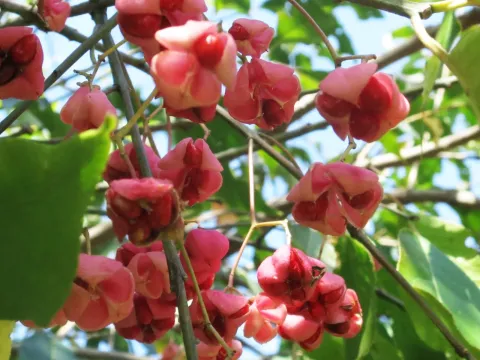
Spindle tree of Bunge
Euonymus bungeanus
The Bunge spindle tree (Euonymus bungeanus) is a deciduous shrub or small tree belonging to the Celastraceae family. Native to China, it has become a popular choice for gardens and parks in temperate regions due to its elegant growth habit and attractive foliage.
What the section contains
Spindle tree of Bunge
The species requires well-drained, fertile soil to reach its full potential. While it can adapt to various soil types, maintaining a neutral or slightly alkaline pH level is ideal. Water management is crucial; the roots should be kept moist but must avoid stagnant water conditions.
Regarding climatic requirements, Euonymus bungeanus is recognized for its significant winter hardiness. It performs best in full sun or light shade. Sunlight exposure is particularly important for developing the vibrant autumn colors that the tree is famous for.
Standard horticultural practices for this tree include spring pruning to maintain the desired crown shape and remove any dead or damaged branches. Fertilizing with balanced nutrients during the early growing season encourages healthy branch structure and leaf density.
Economically and aesthetically, the Bunge spindle tree is utilized as an ornamental specimen in landscaping. Its distinctive fruit capsules and intense autumn leaf coloration make it an excellent choice for ornamental gardening, providing visual interest throughout multiple seasons.
Like many Euonymus species, this tree is susceptible to specific pests, most notably the Euonymus scale and spider mites. These pests can cause chlorosis or thinning of the foliage if left unchecked during the summer months.
Effective management includes maintaining good air circulation within the canopy through proper spacing and pruning. If infestations occur, horticultural oils or appropriate systemic insecticides should be applied to manage pest populations without damaging the plant.