
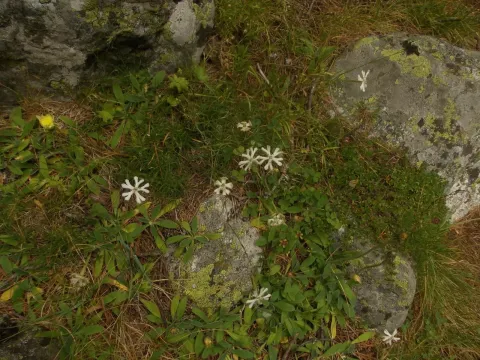
Waldstein's catchfly
Silene waldsteinii
Waldstein's catchfly (Silene waldsteinii) is a herbaceous perennial belonging to the Caryophyllaceae family. Native to the mountainous regions of Southeastern Europe, this plant is well-adapted to rocky habitats and harsh mountain climates.
What the section contains
Waldstein's catchfly
The plant features a basal rosette of narrow leaves and produces delicate, attractive flowers on slender stalks. Its compact habit and resilience make it an excellent choice for rock gardens, scree slopes, and trough gardens that mimic its natural mountain environment.
Regarding soil requirements, the culture demands excellent drainage and a neutral to slightly alkaline pH. Heavy, clay-based soils that retain moisture are unsuitable and will likely lead to root rot if not appropriately amended with gravel or grit.
Exposure to full sun is critical for the healthy growth of this species. In shaded conditions, the plant tends to become leggy and loses its characteristic compact form, which significantly reduces its decorative and biological value in a garden setting.
Maintenance is relatively low, focusing primarily on providing a gritty substrate and ensuring the plant is not crowded by more vigorous neighbors. It is highly winter-hardy, provided that the soil does not remain waterlogged during the colder months.
Root rot caused by fungal pathogens is the primary threat to the stability of Silene waldsteinii populations. High humidity levels combined with poor soil aeration create ideal conditions for various soil-borne diseases.
To mitigate fungal risks, gardeners should ensure proper spacing between plants and avoid overhead watering. Utilizing a top dressing of stone chippings around the crown helps keep the base of the plant dry, preventing rot.
Pests such as aphids may occasionally infest new growth, especially during periods of dry, warm weather. These pests should be managed using gentle insecticidal sprays or systemic treatments if the infestation reaches significant levels.
Slugs and snails can also damage the succulent foliage of the plant, particularly in young specimens. Barrier methods or targeted organic slug controls are effective in protecting the integrity of the plant during the early growth stages.
Maintaining high hygiene standards by removing plant debris and inspecting foliage regularly allows for the early detection of stress factors. Consistent monitoring is the key to maintaining a healthy and thriving display.