
Woolly sandwort
Arenaria tomentosa
Description
Growing requirements
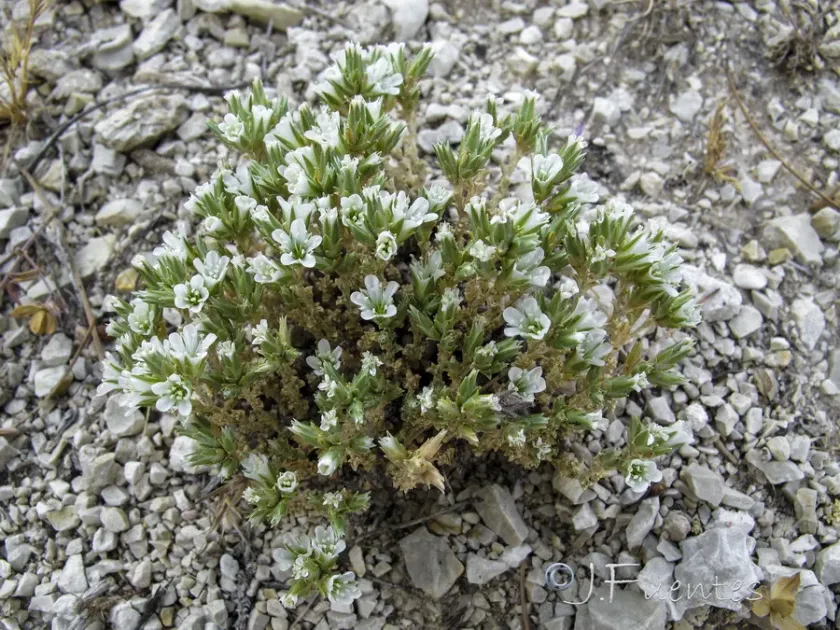
Woolly sandwort (Arenaria tomentosa) is a herbaceous perennial belonging to the Caryophyllaceae family. It is highly valued for its dense, woolly, silver-gray foliage that forms low-growing mats, ideal for xeriscaping.
The species originates from the mountainous regions of Southern Europe. Its evolution in alpine environments has equipped it with a remarkable ability to survive in nutrient-poor soils and exposed, wind-swept locations.
Successful cultivation requires soil with exceptional drainage properties. In garden settings, a substrate consisting of sandy or gritty soil mixed with stone chips is essential to prevent root saturation during periods of high precipitation.
This plant is strictly sun-loving and requires full exposure to thrive. Its characteristic silvery color and compact growth habit are directly dependent on high light intensity, which prevents the plants from becoming leggy or weak.
Cultural management includes careful monitoring of soil moisture. Being drought-tolerant once established, it requires minimal supplemental irrigation. Proper spacing between individual plants is necessary to ensure adequate airflow and prevent the buildup of moisture within the dense mat.
Main diseases and pests
The most common threats to woolly sandwort are fungal pathogens, particularly root and crown rot, which are often exacerbated by high humidity and poor soil aeration. These conditions can rapidly lead to plant decline if not corrected.
Pest issues are generally limited, though slugs and snails may occasionally feed on the leaves in overly damp conditions. Maintaining a layer of coarse gravel or sand around the base of the plants effectively deters these pests and keeps the foliage dry.