
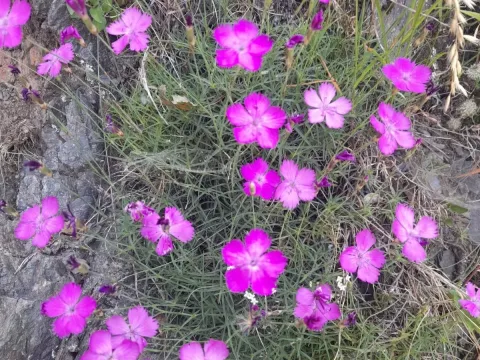
Vigo's Pink
Dianthus vigoi
Vigo's Pink (Dianthus vigoi) is a perennial herbaceous plant belonging to the Caryophyllaceae family. This species originates from specific high-altitude regions, where it has evolved to thrive in harsh, rocky environments and limestone outcroppings.
What the section contains
Vigo's Pink
The plant demonstrates a high level of environmental specialization, requiring well-drained, nutrient-poor, alkaline substrates. In horticultural settings, creating a substrate that mimics these natural conditions is essential for the long-term survival of the species.
Botanically, Dianthus vigoi is characterized by its compact, tufted growth habit and narrow, glaucous leaves. This morphology is an evolutionary adaptation to conserve moisture and protect the plant from high ultraviolet radiation levels typical of alpine climates.
Sunlight is the primary requirement for successful cultivation. The species is highly heliophilic; therefore, any degree of shading will negatively impact its growth, blooming cycle, and structural integrity, often causing the stems to stretch and weaken.
Thermal stability is maintained by the plant's deep taproot system, which allows it to tap into moisture and minerals found in deep rock crevices. It is crucial to ensure excellent aeration of the root zone to prevent hypoxia, which the plant is highly susceptible to.
The most significant threats to the health of Dianthus vigoi are fungal pathogens, specifically those causing root and crown rot. These infections occur primarily when soil moisture exceeds optimal levels or when drainage is inadequate, leading to water stagnation around the base.
Insect pests, including spider mites and thrips, frequently target the foliage during hot, dry spells. These pests damage the plant by sucking cell sap, leading to chlorosis, stunted growth, and a significant reduction in the quality of the blossoms.
To mitigate these risks, it is essential to implement strict moisture management protocols. Monitoring the drainage capacity of the substrate is vital, as any increase in soil moisture can quickly lead to an outbreak of fungal diseases.
Cultural practices such as maintaining optimal plant spacing are effective in improving airflow, which serves as a natural deterrent against both pests and fungal pathogens. Overcrowded conditions should be avoided at all costs.
Chemical control measures should be applied as a last resort, focusing instead on integrated pest management (IPM) techniques. Preventive monitoring for early signs of infestation and maintaining the plant's natural vigor are the best strategies for ensuring a healthy crop.