
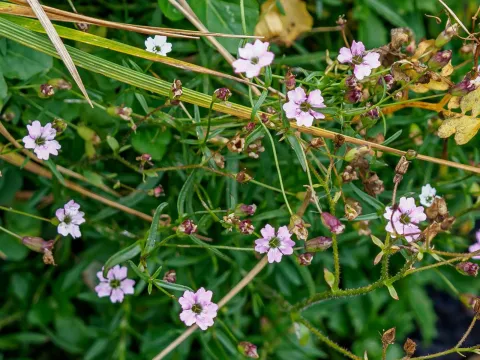
Silene pusilla
Silene pusilla
Silene pusilla is a small, perennial herbaceous plant belonging to the Caryophyllaceae family. Naturally occurring in the alpine and subalpine zones of Central and Southern Europe, it is well-adapted to high-altitude environments and rocky limestone terrains.
What the section contains
Silene pusilla
Botanically, this species is recognized by its dense, cushion-forming growth habit and narrow, grass-like leaves. It reaches only a few centimeters in height, making it an ideal candidate for rock gardens, stone troughs, and crevice plantings.
Cultivation requires conditions that mimic its native habitat. The soil must be exceptionally well-drained, porous, and preferably alkaline. A substrate mixture of sand, grit, and limestone chippings is highly recommended for optimal development.
The climate requirements include cool temperatures and high atmospheric moisture. While it enjoys a position in full sun to partial shade, it is crucial to ensure that the roots stay cool, which is often achieved by surrounding the crown with light-colored pebbles or gravel.
Maintenance involves minimal intervention. It does not require frequent fertilization, as excessive nutrients can lead to leggy, weak growth. Watering should be cautious, ensuring the soil dries out slightly between sessions to prevent root issues.
The primary threat to Silene pusilla is root rot caused by poor soil drainage and excess soil moisture. This is especially prevalent during humid summers or prolonged periods of rainfall, which can kill the plant quickly.
Pests such as slugs and snails are a major concern, as they find the compact, succulent-like cushions an attractive food source, especially during early spring when new growth emerges.
Fungal pathogens like Botrytis may occur in poorly ventilated areas or greenhouses. To mitigate this risk, it is essential to ensure good air circulation around the plants and to avoid overhead watering whenever possible.
Insects like aphids can occasionally infest the flower stalks during the blooming season. Early detection is important, though manual removal or mild soap sprays are usually sufficient without resorting to strong pesticides.
Competition from weeds is a significant stress factor for this plant. Regular weeding is mandatory, as invasive grasses and other vigorous species can quickly suppress the slow-growing Silene pusilla and suffocate it in the garden bed.