
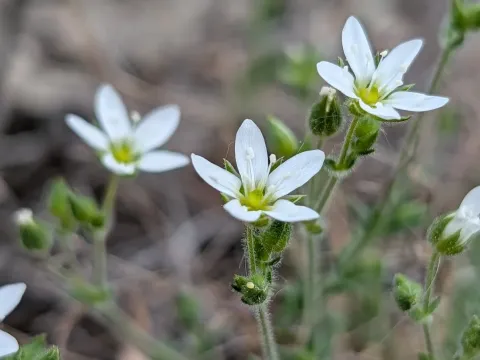
Bristly sandwort
Arenaria hispida
Bristly sandwort (Arenaria hispida) is a member of the Caryophyllaceae family. This perennial herb naturally occurs in rocky habitats and steppe regions across Eurasia, showing remarkable adaptation to harsh environments.
What the section contains
Bristly sandwort
The crop thrives in well-drained, sandy, or rocky soils with neutral or alkaline pH levels. It demonstrates an exceptional tolerance to low-nutrient conditions and intense solar radiation, which is essential for its survival in open landscapes.
Botanically, the plant is characterized by its stiff, bristly leaves that minimize water loss through transpiration. This structural adaptation, combined with a robust root system, allows the plant to flourish in arid and semi-arid conditions.
Climatically, the species is hardy and well-adapted to continental temperatures. It performs best under full sun exposure and requires minimal irrigation once established, making it a sustainable choice for certain types of ground cover.
In agricultural and environmental management, it is often utilized for soil stabilization. Its ability to colonize poor soils and fix loose substrate makes it valuable for reclamation projects aimed at preventing wind and water erosion.
Bristly sandwort is known for its high level of resistance to most plant diseases. The primary concern in its cultivation is the susceptibility to fungal pathogens caused by waterlogged soil conditions or poor aeration.
Insect pests typically do not pose a significant threat to established populations. Due to its rugged nature, the plant maintains strong self-defense mechanisms against common herbivores found in its natural habitat.
To prevent potential issues, it is essential to ensure excellent site drainage. Avoid heavy application of nitrogen fertilizers, as these can promote lush growth that is more susceptible to mildew or rot in humid conditions.
Monitoring the plant during unusually wet seasons is recommended to detect any signs of moisture-related stress. Proper spacing between plants facilitates better airflow and minimizes the risk of pathogen spread.
Overall, this species remains a robust and low-maintenance option for land management. With minimal attention to hygiene and site selection, the risk of disease and pest infestation is kept at a negligible level.