
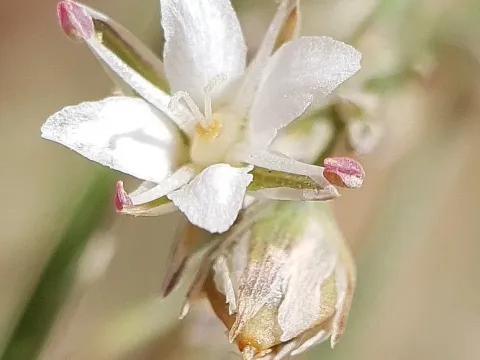
Bufonia
Bufonia
Bufonia is a genus of herbaceous plants belonging to the Caryophyllaceae family, known for its slender, grass-like appearance and branched stems.
What the section contains


Bufonia
In natural habitats, these plants reproduce through small seeds that are disseminated by wind or gravitational flow during the late summer season.
When sowing in a controlled environment, seeds should be sown in early spring, ensuring they are placed in a well-drained, porous growing medium.
Given the small size of the seeds, they should be sown shallowly, as they require sufficient light to trigger the germination process effectively.
Successful establishment depends on maintaining consistent moisture during the early seedling stage, followed by a gradual reduction in watering as the plant matures.
The primary environmental requirement for Bufonia is an open, sunny location, as the plant is highly sensitive to shading, which causes stunted growth.
These plants are naturally adapted to arid and semi-arid regions, thriving in poor, stony, or sandy soils where other competitive vegetation struggles to survive.
A neutral to slightly alkaline soil pH is preferred, as these conditions mimic the natural substrates where Bufonia species are typically found in the wild.
Drainage is the most critical factor in soil management, as stagnant water is detrimental and often leads to rapid deterioration of the root structure.
Bufonia species are highly drought-tolerant and are capable of surviving long periods of summer heat without additional irrigation once the root system is established.
Fungal pathogens remain the most significant threat, particularly those associated with overwatering or poor air circulation around the plant foliage.
Root rot and crown decay are common issues in clay-heavy soils, which trap moisture and prevent essential oxygen from reaching the root zone.
Insect pests, including aphids and various lepidopteran larvae, may feed on the tender stems and flowering buds, weakening the plant's health.
Monitoring for signs of chlorosis or leaf spot is essential, as these symptoms usually indicate a localized outbreak of disease that requires immediate attention.
Integrated pest management strategies, such as maintaining proper spacing and avoiding overhead irrigation, are highly recommended to keep the plants healthy.