
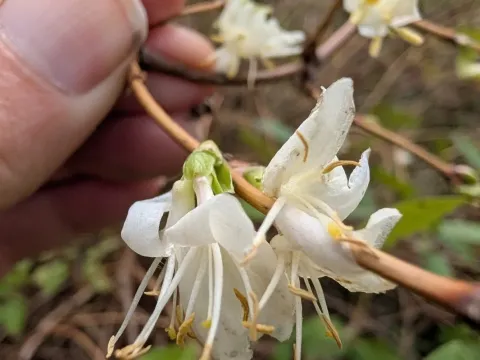
Winter honeysuckle
Lonicera fragrantissima
Winter honeysuckle (Lonicera fragrantissima) is a shrub belonging to the Caprifoliaceae family, native to China. It is valued for its semi-evergreen or deciduous habit and its exceptional fragrance during the late winter and early spring.
What the section contains
Winter honeysuckle
This species thrives in sunny to partially shaded locations. It prefers temperate climates where winters are not excessively severe, as its floral buds are susceptible to damage from late frosts.
The ideal growing medium for this plant is fertile, well-drained soil with a neutral or slightly acidic pH. Poor drainage can significantly limit the growth and health of the shrub.
Standard horticultural practices include maintaining consistent soil moisture during the growing season and applying balanced fertilizers in early spring to encourage vigorous growth.
The shrub is primarily used for ornamental purposes in gardens, especially near pathways or entrances where its intense citrus-like scent can be enjoyed by passersby. It can also be integrated into mixed shrub borders.
The most common disease affecting Lonicera fragrantissima is powdery mildew, which manifests as a white, dusty coating on the leaves. It is often triggered by high humidity and poor air circulation.
Aphids are the primary insect pests, which typically feed on the tender new growth during the spring. Monitoring is essential to ensure that an infestation does not stunt the plant's development.
Root rot can occur if the plant is situated in waterlogged soil. To prevent this, gardeners should ensure the soil structure allows for rapid water drainage.
Regular pruning after the blooming period is recommended not only to shape the plant but also to remove any diseased or dead wood, which reduces the potential for fungal spread.
Effective pest management involves integrated practices, including pruning to improve airflow and the use of insecticidal soaps if natural predators are insufficient to control the population.