
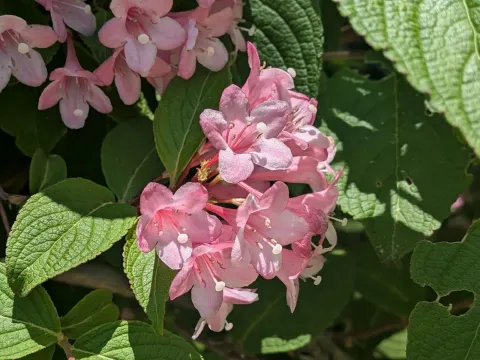
Weigela
Weigela Thunb.
Weigela (Weigela Thunb.) is a genus of deciduous shrubs belonging to the Caprifoliaceae family. It is native to East Asia, with a primary distribution range across countries like Japan, China, Korea, and the Russian Far East.
What the section contains


Weigela
The plant thrives in sunny or semi-shaded locations that provide protection from harsh winds. It prefers moist, fertile, and well-drained loamy soils to ensure robust root development and annual floral displays.
Adequate irrigation is crucial, especially during the peak of the growing season or periods of prolonged drought. While the plant is hardy, it requires consistent soil moisture to support its rapid vegetative growth.
Agricultural maintenance involves scheduled pruning of older stems to encourage new growth, as the plant blooms primarily on the previous year's wood. This is typically performed immediately after the flowering period.
Weigela is primarily utilized for ornamental landscaping, including borders, hedges, and standalone features. It is highly valued for its profuse trumpet-shaped blossoms that provide aesthetic value to any agricultural site.
Common pests affecting Weigela include aphids, spider mites, and leaf miners, which target foliage and developing buds. These insects can cause stunted growth if not managed promptly.
Fungal diseases, including powdery mildew, gray mold (botrytis), and leaf spot, are prevalent in environments with high humidity and poor air circulation around the shrub canopy.
Integrated pest management strategies are recommended, utilizing both cultural practices such as spacing and chemical interventions like fungicides or systemic insecticides.
Maintaining clear ground underneath the shrub and regular removal of dead debris helps reduce the overwintering capacity of common pathogens and pests.
Healthy cultivation practices, including proper fertilization with balanced NPK ratios, play a significant role in improving the plant's natural resistance to environmental stress and disease.