
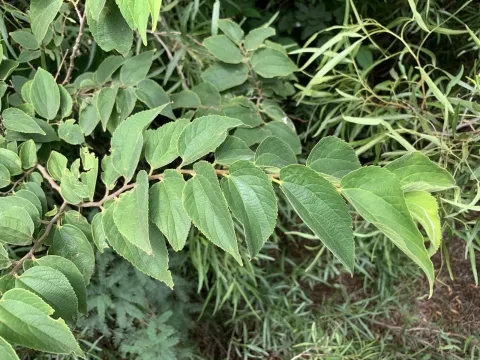
White stinkwood
Celtis africana
White stinkwood (Celtis africana) is a prominent tree species belonging to the Cannabaceae family, widely recognized for its ecological versatility. Originating from Africa, this tree adapts to diverse environments, ranging from dense forests to rocky hillsides, demonstrating remarkable resilience.
What the section contains
White stinkwood
The tree thrives in fertile, well-draining soils with adequate depth for root penetration. While it displays good drought tolerance once fully established, young plants benefit significantly from supplemental irrigation and mulch application to maintain optimal moisture levels.
Regarding climate, Celtis africana prefers temperate to subtropical conditions. It requires full sunlight to achieve its maximum potential height and crown density, although it demonstrates a degree of shade tolerance during its early developmental stages.
Standard agrotechnical practices involve careful management of spacing to prevent overcrowding, as mature trees can develop extensive lateral roots. Periodic pruning is recommended to maintain shape and remove dead wood, which helps in fostering a healthy and aesthetically pleasing specimen.
The tree is highly valued for its durable timber, which is used in the manufacture of high-quality tools, furniture, and agricultural implements. Additionally, it serves as a critical component in environmental reforestation projects and urban greening initiatives due to its structural stability.
Common threats to the health of the tree include aphid infestations and leaf-eating beetles, which can cause significant defoliation if left unmanaged. Integrated pest management strategies, focusing on biological control, are highly recommended for large-scale plantations.
Root rot pathogens represent a severe risk in waterlogged soil conditions. Ensuring proper drainage and avoiding excessive nitrogen fertilization in heavy soils are essential preventive measures to maintain the long-term vitality of the root system.