
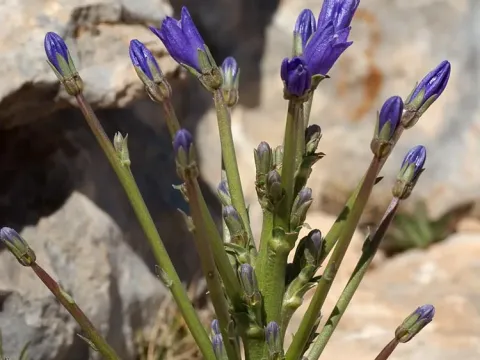
Campanula aizoides
Campanula aizoides
The propagation of Campanula aizoides is typically carried out by seeds, which require stratification to achieve uniform germination after winter dormancy.
What the section contains
Campanula aizoides
When sowing in early spring, seeds must be kept in a cool environment, such as a refrigerator, for at least 4 to 8 weeks to break seed dormancy.
Surface sowing is essential for this species because the seeds need light to germinate; they should be pressed gently into a sterile, moisture-retentive substrate.
Germination usually occurs at temperatures between 18°C and 20°C, requiring high humidity levels and protection from direct harsh sunlight during the initial stage.
Seedlings should be carefully hardened off before transplanting into permanent pots or rock gardens, ensuring the root system is well-established before exposure to outdoor elements.
Campanula aizoides belongs to the Campanulaceae family, characterized by its compact, low-growing habit, which makes it ideal for alpine environments.
The plant thrives in well-drained, lime-rich stony soils that mimic its native rocky, mountainous habitat, preventing moisture buildup around the roots.
Full sun exposure is a mandatory condition for this species; shade will lead to leggy, weak growth and significantly reduced floral production during the summer.
Watering should be managed with caution, as the species is highly susceptible to root rot if the soil remains waterlogged for extended periods.
Regular maintenance involves checking drainage and occasionally pruning faded flowers to encourage secondary blooming throughout the growing season.
Root rot caused by Oomycetes or other soil-borne fungi is the most critical threat to Campanula aizoides, usually triggered by poor drainage conditions.
Powdery mildew may manifest as a white film on the leaves, especially when air humidity is high and there is a lack of proper air circulation.
Gastropods, such as slugs and snails, represent a major biological threat, frequently feeding on tender young leaves and buds during damp weather.
Aphid infestations are occasionally observed, leading to stunted flower development; these can be controlled with organic insecticidal soap or neem oil.
Integrated pest management, including regular inspection and maintaining cleanliness in the surrounding area, is necessary to ensure long-term plant health.