
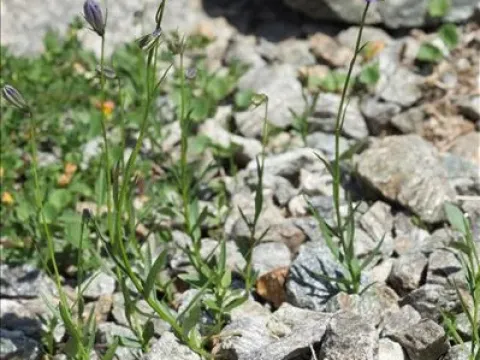
Long-sepaled bellflower
Campanula longisepala
The long-sepaled bellflower (Campanula longisepala) is a member of the Campanulaceae family. This perennial herbaceous plant is native to rocky terrains, exhibiting high adaptation to mountain climates.
What the section contains
Long-sepaled bellflower
For cultivation, this crop requires sites with full sun or partial shade. Well-drained soil is essential, as the species is highly susceptible to root decay if waterlogged, especially during dormant phases.
The plant thrives in neutral to slightly alkaline, light, and sandy loamy soils. It is crucial to ensure that the substrate is rich in minerals while maintaining low moisture retention capacity near the root collar.
Climatically, it is a hardy species capable of withstanding significant thermal fluctuations. In agricultural practice, providing a stable, well-ventilated environment is key to preserving the plant's health.
Effective management includes light fertilization during the early growing season. Avoiding high nitrogen levels is recommended to prevent excessive vegetative growth that may hinder the abundance of flowers.
Common pathological threats include fungal infections such as powdery mildew and root rot. These occur primarily in poorly ventilated areas or under conditions of stagnant humidity in the soil profile.
Pests like slugs and snails are the most prominent threats, particularly during the early spring when the plant produces tender young foliage that is highly attractive to gastropods.
To mitigate these risks, farmers should employ clean cultivation practices, including the removal of debris around the base of the plant to eliminate hiding spots for pests.
Mulching with coarse materials such as gravel or crushed stone is an effective cultural control method that creates a hostile environment for slugs while assisting in drainage.
If chemical intervention is necessary, targeted fungicides and molluscicides should be applied strictly according to the manufacturer's dosage to protect the plant and the surrounding ecosystem.