
Lobelia tupa
Lobelia tupa
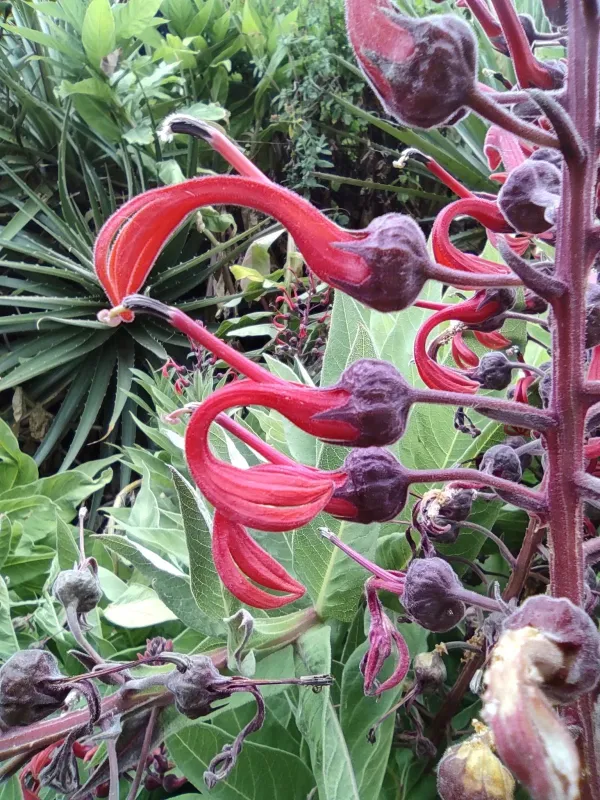
Description
Sowing dates
The sowing of Lobelia tupa seeds is typically performed in controlled indoor environments or greenhouses starting in late winter to early spring.
The seeds are extremely small and require light for germination, so they should be surface-sown on moist soil without being covered by a substrate layer.
Temperature control is vital; maintaining a steady range of 20–22 degrees Celsius ensures optimal germination rates and uniform development of the seedlings.
Once the first pair of true leaves appears, the seedlings should be pricked out into individual pots to foster a strong and healthy root system.
Acclimatization and transplanting to the outdoors should only occur once all danger of frost has passed, ensuring the plants are well-established.
Growing requirements
Lobelia tupa is a prominent member of the Campanulaceae family, native to Chile, known for its tall stature and vibrant, tubular reddish-orange flowers.
The plant thrives in locations with full sun exposure, although it requires protection from strong winds that could potentially snap its tall, herbaceous stems.
A well-draining, nutrient-rich soil is essential for the healthy growth of this species, as it is highly susceptible to root rot caused by waterlogging.
Consistent, moderate moisture is required during the growing season, though the soil should never become excessively soggy or water-saturated.
As a tender perennial in many climates, it may require winter protection or relocation to a cool indoor area to survive in regions with freezing winters.
Main diseases and pests
Fungal infections, particularly root and crown rot, remain the primary threat to Lobelia tupa, usually triggered by poor soil drainage and high humidity levels.
Pests such as aphids and spider mites can infest the foliage, particularly in sheltered or dry conditions, requiring proactive monitoring and intervention.
Slugs and snails pose a significant risk to young plants, often consuming foliage and stems during the early stages of development in the garden.
Leaf spot diseases may occur when plants are crowded, as the lack of airflow promotes damp conditions that favor the development of pathogens.
Maintaining proper spacing and ensuring the base of the plant remains dry are fundamental strategies for preventing the spread of common garden pests.
Harvesting
Harvesting for specific applications involves cutting the stems and leaves during the peak flowering stage to maximize the concentration of natural compounds.
The collected material should be dried in a dark, airy environment to prevent the degradation of active alkaloids and to avoid potential mold growth.
For ornamental gardens, regular deadheading is recommended to prevent seed formation, which redirects energy back into the plant and encourages longer flowering.
Workers must exercise extreme caution, as the plant contains a potent latex-like sap that can cause significant irritation to the skin and mucous membranes.
Proper storage in sealed, light-proof containers is necessary to preserve the quality and utility of the harvested plant material for subsequent use.