
Campanula aucheri
Campanula aucheri
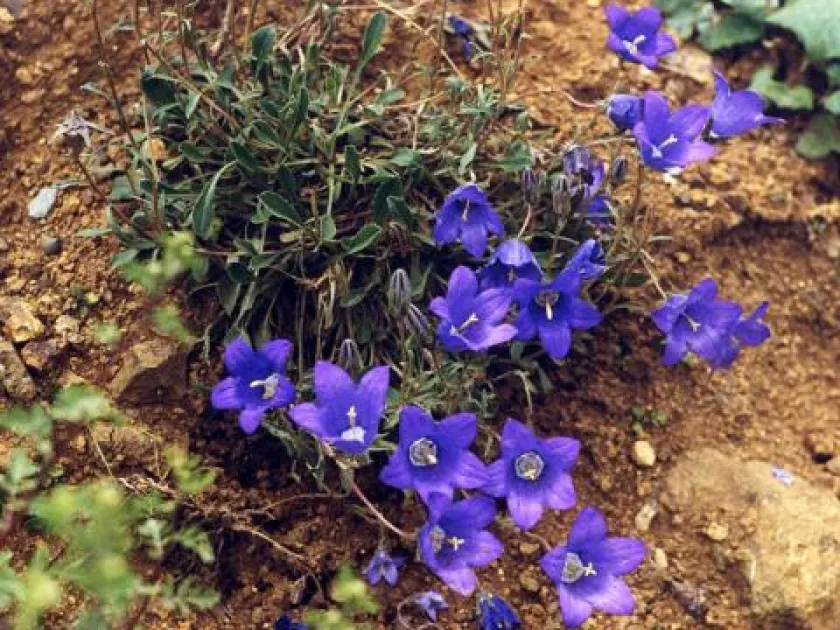
Description
Sowing dates
Sowing Campanula aucheri is best performed in early spring to take advantage of the natural spring warmth. Seeds are minute and require surface sowing to ensure adequate light exposure for germination.
The optimal substrate for sowing should be light, well-draining, and composed primarily of a sand-peat mixture. Covering seeds with a thin layer of sand helps maintain consistent moisture without burying them.
Cold stratification for 2 to 4 weeks before sowing can significantly improve germination rates, as the species is adapted to alpine winter cycles. Keep the seedbed in a cool place before moving to a warmer environment.
Once seedlings have developed their second pair of true leaves, they should be transplanted into individual pots. This practice encourages the development of a strong root system before final placement in the garden.
Final hardening-off of the young plants should occur over a period of 7 to 10 days before they are moved to the permanent outdoor location to ensure resilience against fluctuating temperatures.
Growing requirements
Campanula aucheri is a perennial herb belonging to the Campanulaceae family, native to high-altitude regions. It is highly valued in rock gardening for its compact growth habit and vibrant flowers.
This crop thrives in sunny or partially shaded spots with excellent drainage. Heavy clay soils must be amended with grit or perlite to prevent root asphyxiation during the wet season.
Watering requirements are moderate. It is critical to avoid waterlogging, as the species is prone to rotting when kept in consistently damp or saturated soil conditions.
Soil pH levels should ideally range between 6.5 and 7.5. Minimal fertilization is required, as the plant is naturally suited to rocky, nutrient-poor alpine substrates.
Protection from extreme midday heat is recommended in warmer climates to maintain the plant's health and extend the blooming period throughout the late spring and early summer.
Main diseases and pests
Root rot caused by poor soil drainage is the most significant threat to the plant's survival. Maintaining a dry crown area is essential to prevent fungal infection and long-term damage.
Slugs and snails present a persistent challenge, especially for young foliage. Providing barriers like gravel mulch around the base of the plant can deter these pests effectively.
Aphids can occasionally infest the flower stalks during periods of drought. Monitoring and using mild organic soaps or specialized pesticides can help manage these populations without plant injury.
Powdery mildew may develop if there is insufficient air circulation between plants. Maintaining proper spacing during the planting phase is the best strategy for disease prevention.
Competition from fast-growing weeds can suppress the slow-growing rosettes of Campanula aucheri. Manual weeding around the plant base is necessary to ensure optimal growth and vigor.