
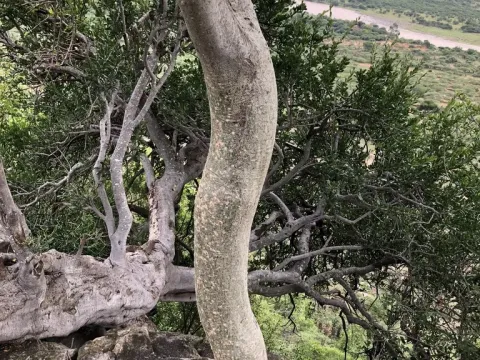
African myrrh
Commiphora africana
African myrrh (Commiphora africana) is a prominent species within the Burseraceae family. It typically grows as a small deciduous tree or shrub, characterized by a gnarled trunk and spiny branches, common in the arid savannah regions of Africa.
What the section contains
African myrrh
The plant thrives in well-drained soils, preferring sandy or rocky substrates that prevent waterlogging. Its ability to survive in environments with very low annual rainfall makes it a vital component of the desert and semi-desert ecosystems.
It requires high solar exposure to maintain its metabolic functions. The climate must be consistently warm, as this species is extremely sensitive to cold and frost, restricting its distribution to tropical and subtropical latitudes.
Agricultural management involves ensuring the trees are protected from excessive browsing by livestock, which frequently consume the succulent leaves and young shoots. Natural regeneration is often supplemented by vegetative propagation through cuttings.
The primary economic value lies in the exudation of a fragrant resin. This substance is harvested by making light incisions in the bark. Beyond the resin, the tree is used for its medicinal bark and as a living barrier in agricultural landscapes.
The tree faces significant pressure from wood-boring beetles that can devastate standing populations. Additionally, root rot caused by pathogenic fungi can occur if the soil moisture levels are inappropriately high due to poor drainage or unexpected flooding.