
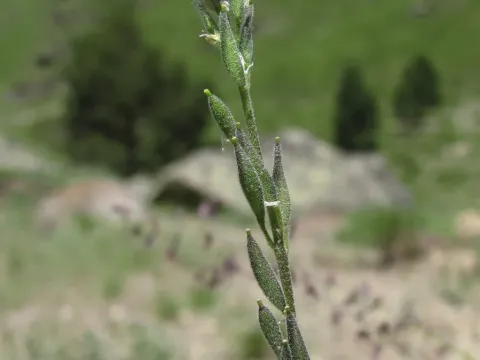
Draba stylaris
Draba stylaris
Draba stylaris is a perennial herbaceous plant belonging to the Brassicaceae family. In the field of botany and plant science, it is recognized as a typical representative of the high-altitude flora of European mountain ranges.
What the section contains
Draba stylaris
The plant originates from the alpine and subalpine belts, where it occupies specific ecological niches. It is particularly well-adapted to rocky slopes, scree, and limestone crevices that provide the necessary stability for its root system.
Botanically, Draba stylaris features a dense rosette of leaves that serves as an adaptation to withstand strong winds and high levels of UV radiation found at high elevations. Its growth form is low to the ground, which helps in thermal regulation during harsh weather.
The plant strictly requires well-drained, alkaline, or neutral soil. It is highly intolerant of waterlogging, which often leads to root decay. Successful growth is usually observed in rocky or mineral-rich soils with a very low organic matter content.
Climatic requirements involve a long period of winter dormancy under snow cover and a cool, sunny growing season. The plant relies on distinct thermal variations to trigger its flowering cycle, making it difficult to maintain in low-altitude environments.
The primary threats to Draba stylaris health are fungal infections associated with excessive soil moisture. Root rot and damping-off disease are common when the drainage parameters are not met or if the ambient humidity remains consistently high.
Pests typical for the cabbage family, such as flea beetles, represent a direct threat to the foliage. These insects can rapidly defoliate the plant, reducing its ability to synthesize energy and lowering its winter survival rate.
Competition from invasive or faster-growing plant species is another significant limiting factor. Because Draba stylaris is a slow-growing species, it cannot compete effectively with more aggressive flora in disturbed or nutrient-rich soil habitats.
Environmental factors, particularly climate change, are increasingly threatening the stability of its populations. The shifting of altitudinal zones forces the plant into smaller, more fragmented habitats, increasing the risk of localized extinction.
Management of the species, if intended for specialized collections, requires strict monitoring of the microclimate. Ensuring proper ventilation and preventing the buildup of moss or debris around the rosette is essential to prevent secondary pest infestations.