
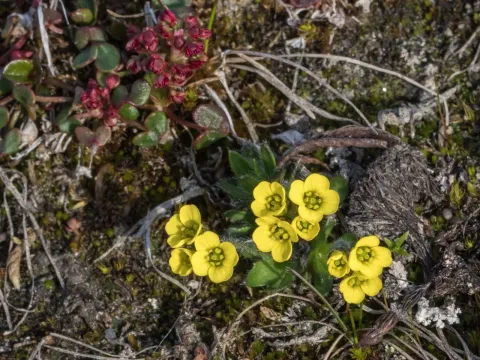
Draba oxycarpa
Draba oxycarpa
Draba oxycarpa is a perennial plant species belonging to the Brassicaceae family. It is recognized as a typical alpine flora element, specialized in thriving in the challenging, low-nutrient environments of mountain peaks and rocky screes.
What the section contains
Draba oxycarpa
Originating from the mountain systems of Central Asia, this species has evolved to tolerate extreme temperature fluctuations and high UV exposure. Its habitat is characterized by loose, rocky soils that provide excellent drainage, preventing water accumulation around the crown.
Botanically, the plant forms dense rosettes of leaves, which are often covered with fine hairs, serving as an adaptation to reduce transpiration. The flower stalks emerge from these rosettes, bearing small but numerous flowers typical of the mustard family.
Regarding soil requirements, Draba oxycarpa demands a grit-heavy, mineral-rich, and highly permeable substrate. In cultivation, it is essential to ensure that the root system is never exposed to stagnant water, which is the primary cause of failure in domestic conditions.
Agricultural and horticultural use is limited to niche applications, such as specialized rock gardens, alpine plant collections, and biodiversity conservation projects aimed at protecting high-altitude native species.
The most significant threat to Draba oxycarpa is root rot, induced by poor drainage and excessive atmospheric humidity. Since the plant is adapted to dry air and well-aerated soil, any shift towards humid lowland conditions significantly increases the risk of fungal pathogens.
Pest pressure is relatively low in natural habitats, but in garden or experimental settings, aphids can become a significant problem by colonizing the leaf rosettes. Their activity weakens the plant and can facilitate the transmission of viral diseases.
Caterpillars of certain butterfly species may occasionally consume the foliage or developing seed pods, potentially reducing the plant's ability to propagate naturally during the growing season.
Soil-dwelling insects, such as wireworms or root-feeding larvae, may target the crown area, leading to sudden wilting and eventual plant death. Regular monitoring of the soil composition is recommended.
To prevent disease, it is crucial to avoid overhead irrigation and ensure high levels of ventilation around the plants, maintaining the dry conditions necessary for the health of this alpine species.