
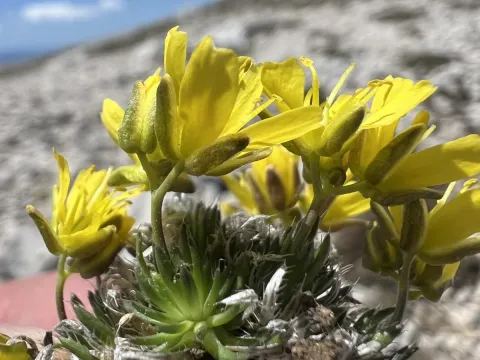
Draba scardica
Draba scardica
Draba scardica is a perennial herb belonging to the Brassicaceae family. Originating from the Balkan mountain regions, this plant is well-adapted to harsh environmental conditions, rocky terrain, and high-altitude habitats where competition from taller vegetation is minimal.
What the section contains
Draba scardica
Botanically, the plant is characterized by its compact, cushion-forming growth habit. The leaves are arranged in basal rosettes and often feature a fine pubescence, which serves as a protective mechanism against extreme temperature fluctuations and excessive moisture loss in mountain climates.
Cultivation requires soils with excellent drainage, typically consisting of rocky, sandy, or gravelly substrates. The plant is highly intolerant of waterlogged soil conditions, which frequently lead to root rot; therefore, providing a mineral-rich environment is essential for its longevity.
Climatic requirements focus on full solar exposure and good air circulation. The species thrives in temperate conditions that mimic alpine environments, demanding cool roots paired with direct sunlight on the foliage to maintain its characteristic compact morphology throughout the year.
Economically and horticulturally, this plant is primarily utilized in alpine gardens, rockeries, and specialized botanical collections. Its significance lies in its aesthetic value as a ground-covering plant that produces abundant yellow flowers during the early spring season.
The main threats to Draba scardica include various fungal pathogens that flourish in humid, poorly ventilated microclimates. Preventing these threats involves strict adherence to proper irrigation schedules and ensuring the soil mix remains porous and free-draining.
Insects, particularly those that feed on cruciferous plants, may occasionally attack the rosettes. Maintaining plant health through proper site selection and mineral-based fertilizing helps the plants resist potential infestations and recover from environmental stress factors.