
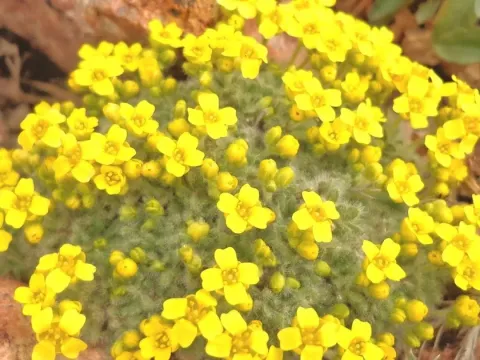
Draba
Draba hybrids
Draba, a member of the Brassicaceae family, is a versatile genus including both annual and perennial species often used in alpine and rock gardens. Seeds should be sown in early spring or late autumn, depending on the specific hybrid requirements.
What the section contains
Draba
Due to the extremely small size of the seeds, they are typically scattered on the surface of a fine-textured substrate and pressed lightly without covering them deeply. Adequate light exposure is essential for the germination process of most Draba varieties.
In nursery conditions, maintaining a consistent temperature of around 15–18°C is optimal. High-quality sterile growing media should be used to prevent damping-off, which is a frequent issue for small-seeded alpine species.
Once the seedlings develop their first true leaves, they can be transplanted to their final location. Careful handling is required to avoid damaging the delicate root systems that are typical for this genus.
Sowing in open ground requires a clean, weed-free environment as young Draba plants are initially slow to establish and can easily be outcompeted by faster-growing weed species.
The success of growing Draba hybrids depends heavily on site selection. These plants require excellent drainage, making them ideal for scree beds or rocky slopes where water cannot accumulate near the crown.
Full sun is a prerequisite for most hybrids to maintain their compact, cushion-like habit. Shade leads to etiolated, weak growth and a significant reduction in the intensity and duration of flowering.
These plants thrive in poor, gritty soils and do not require heavy fertilization. Excess nitrogen application promotes lush, soft foliage that is more susceptible to disease and winter damage rather than structural growth.
A neutral to slightly alkaline soil pH is preferred. In acidic soil conditions, the addition of limestone grit or crushed shell can significantly improve the health and resilience of the plants.
Draba is highly cold-tolerant and well-adapted to harsh mountain environments. Providing a layer of gravel mulch around the plants helps keep the foliage dry and prevents the crown from rotting during wet winters.
The primary concern for Draba cultivation is root and crown rot, primarily induced by poor drainage and stagnant moisture. Maintaining dry conditions around the collar of the plant is the most effective preventative measure.
Powdery mildew may occur if air circulation is poor, particularly during hot and humid spells in the summer. Improving plant spacing and reducing overhead watering can help mitigate these risks significantly.
Crucifer flea beetles are common pests that attack Draba, leaving characteristic shot-hole patterns on the foliage. Early intervention with suitable contact insecticides is recommended when pest pressure is high.
Aphids can occasionally cluster on developing flower stalks, draining sap and weakening the plant. Regular monitoring of the garden will ensure that such infestations are detected early and addressed before they spread.
Preventative hygiene, such as removing dead leaves and debris from the base of the cushion, is crucial. This practice discourages the buildup of fungal spores and provides a cleaner environment for the plant to thrive.