
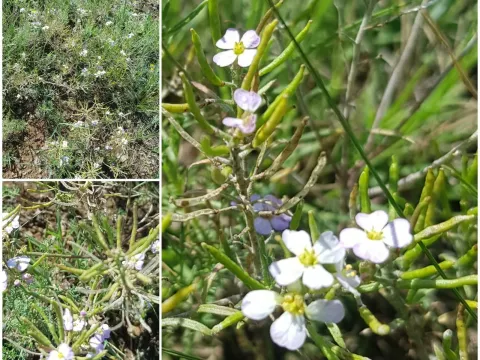
Dontostemon
Dontostemon
Dontostemon is a genus of herbaceous plants belonging to the Brassicaceae family, known for its versatility and potential as a niche crop. While primarily studied for its biological characteristics, it can be cultivated for its seeds and honey-producing properties in suitable agricultural environments.
What the section contains


Dontostemon
The sowing season typically begins in early spring, once the soil temperatures consistently reach +5 to +8 degrees Celsius. Early planting is vital to capitalize on the moisture reserves of the soil, ensuring uniform germination across the field.
To achieve the best results, seeds should be sown at a shallow depth of approximately 1-2 centimeters. Using a drill-seeding method with rows spaced 15-20 centimeters apart provides sufficient space for root and vegetative development.
Before sowing, the field must be properly prepared through plowing and leveling. A firm seedbed is essential to ensure that the tiny seeds have good contact with the soil, which facilitates water uptake and prevents premature desiccation of the seedlings.
Success in sowing depends heavily on weed control in the weeks preceding the planting. Because the seedlings are relatively small in the early stages, a clean seedbed is the most effective way to avoid competition from aggressive annual weeds.
Dontostemon thrives in well-aerated soils with a neutral pH, preferring loamy or sandy loam textures. Excellent drainage is non-negotiable, as the roots are susceptible to damage if waterlogged conditions persist during the growing cycle.
The plant is highly photophilous and requires full sun exposure for optimal growth. Areas with significant shadowing from trees or nearby structures will lead to stunted plant height and reduced reproductive output.
While the plant is hardy and tolerates mild spring frosts, it requires consistent moisture during the vegetative phase. However, once the flowering stage is reached, it prefers drier conditions to prevent the development of fungal infections in the flower heads.
Balanced fertilization is key to a successful harvest. Providing a phosphorus-rich fertilizer promotes stronger root systems, while potassium helps the plant manage stress factors such as fluctuating temperatures or mild drought.
Crop rotation remains the most critical requirement for long-term productivity. It should not be planted consecutively in the same field, especially following other Brassicaceae members, to break the lifecycle of soil-borne diseases.
The yield potential of Dontostemon is highly dependent on environmental stability during the flowering and seed-set phases. When managed correctly, the crop produces a reliable amount of biomass and seeds suitable for secondary processing.
To maximize yields, agronomists recommend regular inspection of the plants to monitor for nutrient deficiencies. Foliar feeding can be beneficial if the crop shows signs of stress during rapid vegetative growth periods.
Harvesting should be timed to avoid significant seed shattering, which is a common challenge for many plants in the cabbage family. Early harvesting at the first sign of maturity can prevent losses due to birds or weather exposure.
Storage of the harvested crop requires low-moisture conditions to maintain seed quality. Proper drying facilities should be used immediately after the harvest to bring moisture levels down to the threshold required for long-term safe storage.
Overall economic success depends on keeping production costs low by utilizing efficient mechanical harvesting tools and minimizing chemical interventions through robust integrated pest management practices.
The primary threats to Dontostemon involve insect pests commonly found in the Brassicaceae family. Flea beetles are the most frequent cause of seedling loss, often devastating entire fields in a matter of days if left uncontrolled.
Aphids pose a significant risk, particularly during the middle of the growing season. They cluster on the underside of leaves and along stems, extracting sap and weakening the plant's ability to produce flowers, ultimately impacting the final yield.
- Monitor crops for early signs of beetle activity.
- Employ trap crops to manage pest populations naturally.
- Ensure proper spacing to increase air circulation and reduce humidity.
- Apply biological pest control agents when threshold levels are exceeded.
- Remove infected crop residues post-harvest to reduce the overwintering population of pests.
In humid regions, fungal pathogens like downy mildew may appear. These are best managed by maintaining optimal stand density and ensuring that fields are kept free of standing water, which serves as a catalyst for fungal growth.
Effective pest management relies on early detection and a multi-faceted approach. By combining cultural practices with targeted, responsible chemical use, farmers can protect their investment and ensure a high-quality product at harvest.