
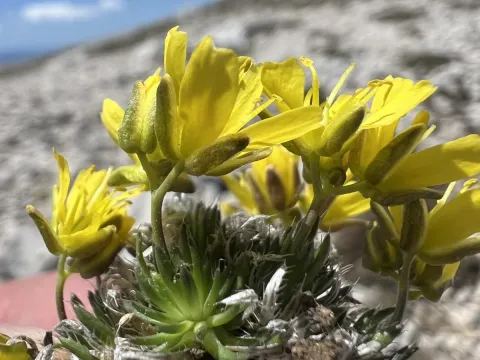
Draba athoa
Draba athoa
Draba athoa, commonly known as a type of whitlow-grass, is a perennial flowering plant belonging to the Brassicaceae family. It is typically found in mountainous regions, adapted to harsh, rocky environments.
What the section contains
Draba athoa
The plant grows in small, dense basal rosettes composed of narrow, pubescent leaves. Its low-growing habit makes it an excellent candidate for alpine gardens where space is limited and drainage is superior.
To cultivate Draba athoa successfully, one must provide a well-draining substrate, such as a mixture of grit, sand, and lean soil. It thrives in locations that replicate its natural habitat, emphasizing the need for a gritty root zone.
Full sun is essential for the healthy development of this species. In shaded conditions, the rosettes tend to lose their structural integrity, and the plant becomes prone to physiological stress.
Agrotechnical care is minimal, focusing mainly on ensuring the plant does not sit in stagnant water during winter or humid periods. Fertilization is generally unnecessary and often discouraged, as it encourages weak, excessive growth.
The most significant threat to Draba athoa is root rot caused by poor soil drainage and high humidity. This is especially prevalent during dormant or winter months.
Fungal diseases can occur if the foliage is kept consistently damp. Proper air circulation around the plants is critical to mitigate these risks and prevent the development of mold or mildew.
Pests such as flea beetles can target the foliage during the early growing season. Monitoring these populations is necessary if the plant is grown in areas with high insect pressure.
Slugs and snails may occasionally feed on the tender leaf tips, which can lead to unsightly damage to the rosettes and potential secondary infections at the wound sites.
Maintaining a clean growing environment and using a layer of top-dressing grit significantly reduces the likelihood of both pest infestations and pathogen development.