
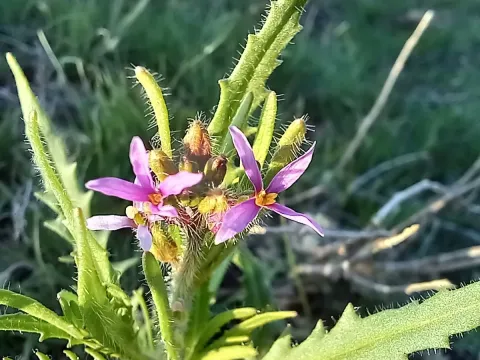
Diptychocarpus
Diptychocarpus
Diptychocarpus is an herbaceous annual belonging to the Brassicaceae family, well-adapted to the harsh conditions of arid and semi-arid environments. Its rapid vegetative cycle allows the plant to complete its lifecycle before the onset of extreme summer heat, which is typical for its native habitat.
What the section contains

Diptychocarpus
The plant possesses a deep taproot system, which serves as a crucial adaptation for surviving in environments where moisture is primarily available in deeper soil layers. This root architecture helps the plant maintain stability and metabolic activity during early spring development.
Botanically, Diptychocarpus is recognized by its distinct seed pod morphology, which facilitates effective seed dispersal in wind-prone environments. The foliage grows in a basal rosette pattern during the early stages, maximizing photosynthetic efficiency.
While primarily found as a wild species, its potential in agriculture lies in its high resilience to environmental stressors. Research into this genus focuses on its ability to colonize marginal lands where traditional crops struggle to germinate or thrive.
Agricultural use of the plant remains niche, often evaluated for its potential role in range management or as a source of genetic material for breeding climate-resilient crops. Understanding its phenology is essential for future domestication efforts.
Diptychocarpus thrives in well-drained, sandy or loamy soils with low salinity tolerance. Proper soil aeration is vital for the development of its root system, as compacted soils significantly impede its natural growth patterns.
The climate requirements involve a short, cool, and moderately moist growing season. Abundant solar radiation is essential throughout its vegetative phase to ensure the plant accumulates sufficient carbohydrates for reproduction.
Water requirements are modest, focusing primarily on the germination phase. Once established, the plant exhibits significant drought tolerance, though supplemental irrigation may be beneficial in extremely dry years to maintain biomass.
The crop does not require heavy fertilization, as it is evolved to perform well in soils with low to moderate nutrient availability. However, phosphorus application during the initial growth stage can promote healthier root establishment.
Spacing between plants should be optimized to reduce inter-plant competition for moisture. High-density planting in water-stressed regions often leads to stunted growth and reduced seed yield, necessitating careful management of seed rates.
Major threats to Diptychocarpus include cruciferous flea beetles, which are highly destructive during the seedling phase. Rapid monitoring and early management of these pests are critical to preventing total crop loss in susceptible areas.
Fungal diseases, such as powdery mildew, pose a significant risk when high humidity and temperature fluctuations occur simultaneously. These conditions favor spore germination and rapid spread across the plant canopy.
Root rot pathogens are a common concern in fields with poor drainage or over-irrigation. These pathogens target the root system, causing systemic wilting and eventual collapse of the plant during its flowering stage.
Effective prevention strategy requires a strict crop rotation schedule, avoiding consecutive planting of any Brassica-related species on the same field. This practice helps break the life cycle of soil-borne pathogens and insect pests.
When chemical intervention is necessary, it must be performed with precision to minimize the impact on local pollinators. Biopesticides are often preferred for maintaining an ecological balance within the agroecosystem.