
Draba dubia
Draba dubia
Description
Growing requirements
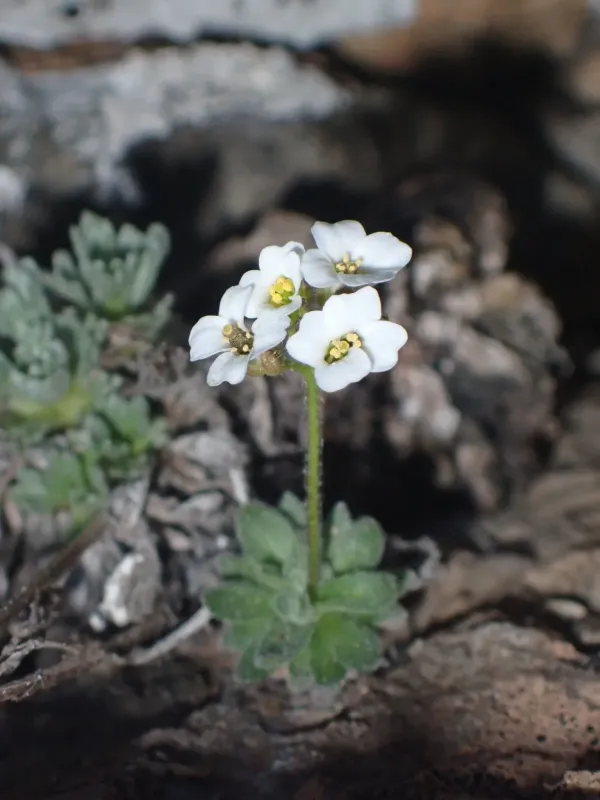
Draba dubia, commonly known as the doubtful whitlow-grass, is a perennial herbaceous plant belonging to the Brassicaceae family. It is a true alpine species, evolutionarily adapted to the rigorous environment of high-altitude mountain ranges.
The plant grows in small, dense basal rosettes, which helps in thermal regulation and moisture retention in the thin air of the mountains. Its stems are robust yet compact, designed to withstand the harsh, persistent winds of its native habitat.
The natural range of this species is primarily centered in European mountain systems, including the Alps and the Carpathians. It typically thrives in rocky crevices, scree slopes, and sites with poor, gritty, and well-drained soils, where there is very little competition.
Optimal growth requires high light intensity and cool temperatures during the vegetative season. The species is highly cold-tolerant, capable of surviving beneath heavy snow packs for extended periods and enduring the sharp diurnal temperature shifts typical of high-altitude zones.
While not cultivated for large-scale agricultural use, Draba dubia is highly valued in rock gardening and alpine landscaping. It serves as an excellent model for scientists studying plant adaptation to extreme ecological niches.
Main diseases and pests
Major threats to the species involve climate-related shifts in its native alpine ecosystems. Warming trends allow competitive species from lower altitudes to migrate upward, potentially displacing the specialized Draba dubia populations.
Like many members of the Brassicaceae family, it can be susceptible to fungal diseases such as root rot if planted in environments with poor drainage. Providing a mineral-rich, perfectly draining substrate is essential for its survival in artificial conditions.
Pests are rarely a significant problem in the plant's native habitat due to the harsh environmental conditions. However, in low-altitude garden settings, common cruciferous pests such as flea beetles may occasionally damage the leaf rosettes.
The species possesses high inherent resilience to pathogens due to its isolated habitat, which naturally filters out many lowland pests and diseases. Its health is primarily maintained through adherence to its specific light and water requirements.
Conservation of the species relies on protecting its fragile alpine environment from human disturbance, including excessive hiking traffic and soil compaction in its natural rocky mountain habitats.