
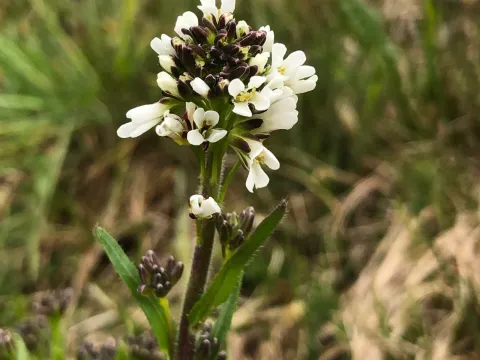
Hairy rock cress
Arabis hirsuta
Arabis hirsuta is typically sown in early spring or late autumn to allow for natural cold stratification of the seeds. The seeds are very small and should be sown on the surface of well-prepared, loose soil, requiring minimal to no covering.
What the section contains
Hairy rock cress
Consistent moisture is essential during the germination phase, which usually lasts two to three weeks. Providing a light mist or fine spray irrigation helps ensure uniform emergence without displacing the tiny seeds from the soil surface.
In a field setting, row spacing should be approximately 25 centimeters to facilitate aeration and weed management. Ensuring sufficient space between individual plants prevents early competition and supports the development of a robust root system.
Soil temperature plays a significant role in successful establishment. The ideal range for emergence is between 10 and 15 degrees Celsius. Early season sowing allows the plants to establish before the onset of extreme summer heat.
Thinning might be necessary if the seed density was high during the initial broadcast. Proper spacing ensures that each plant receives adequate light and resources, which is vital for the health of this Brassicaceae member.
This species thrives in well-drained, sandy or loamy soils with a neutral to alkaline pH. It is highly sensitive to waterlogged conditions, which can lead to rapid root decay, making soil texture a critical factor in site selection.
Full sun is required for optimal photosynthesis and to prevent etiolation. While it can survive in partial shade, the plant's structural integrity and reproductive capacity are significantly reduced in lower light conditions.
The plant is adapted to moderate nutrient levels and does not require heavy fertilization. Excessive nitrogen can lead to succulent, weak growth that becomes highly susceptible to common pests and physiological stress during the season.
Water management should focus on maintaining adequate moisture without saturation. As a plant adapted to rocky or open environments, it possesses a degree of drought tolerance, though growth may slow during prolonged hot, dry spells.
Cold hardiness is one of the key strengths of Arabis hirsuta, allowing it to overwinter successfully in various temperate zones. The plant generally requires a period of cool temperatures to trigger subsequent flowering cycles.
Crucifer pests, particularly flea beetles, pose the most significant threat to the vegetative stage of this crop. Early detection and the use of physical barriers or targeted interventions are critical for minimizing leaf damage.
Fungal pathogens such as powdery mildew can affect the foliage during periods of high humidity and poor air circulation. Improving spacing and ensuring adequate ventilation within the crop canopy are essential preventive measures.
Root rot, driven by stagnant water and heavy soil compaction, remains a primary concern for growers. Implementing proper soil drainage and avoiding over-irrigation are the best strategies to maintain long-term crop health.
Effective weed control during the first weeks after sowing is vital, as the seedlings are not competitive enough to overcome aggressive weeds. Mechanical weeding or appropriate mulching practices should be utilized early on.
- Flea beetles.
- Powdery mildew.
- Downy mildew.
- Root rot pathogens.