
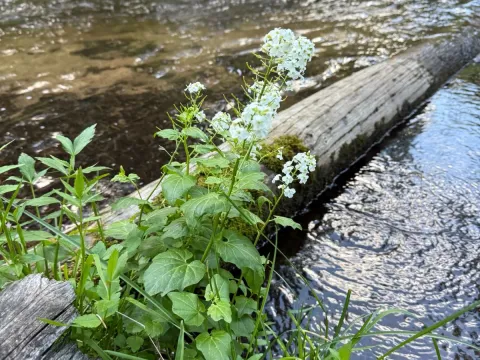
Heartleaf bittercress
Cardamine cordifolia
Heartleaf bittercress (Cardamine cordifolia) is a robust perennial herb belonging to the Brassicaceae family, recognized for its heart-shaped leaves and affinity for moisture-rich environments.
What the section contains
Heartleaf bittercress
Native to the mountainous regions of North America, this plant is naturally adapted to cool, moist habitats such as streamsides and shaded forest margins, dictating its preference for similar agricultural conditions.
The ideal cultivation site must offer partial shade and consistently moist, rich, loamy soil. In professional farming, moisture management through irrigation is essential to mimic the plant's natural mountain habitat.
Soil nutrient status should be maintained through the application of organic matter. The plant thrives in slightly acidic to neutral soil, provided that good drainage is maintained to prevent root rot during cooler seasons.
Propagation is most efficient through vegetative division of the rhizomes or seed sowing during early spring. This allows for stable production and ensures the plant covers the designated area quickly.
Like many members of the Brassicaceae family, Heartleaf bittercress is susceptible to flea beetles, which can cause significant damage to foliage during the vegetative stage.
High-humidity requirements make the crop prone to fungal issues, including powdery mildew and various leaf spot diseases, especially in overcrowded or poorly ventilated field blocks.
Effective management strategies involve thinning plant densities to improve airflow and monitoring the field for the first signs of pest infestation during early growth.
Integrated pest management (IPM) is strongly recommended to protect the crop without relying on harsh chemical pesticides, ensuring the quality of the harvested biomass.
Cultural practices, such as maintaining cleanliness in the field and removing decaying plant debris, remain the most effective preventive measures against major disease outbreaks.