
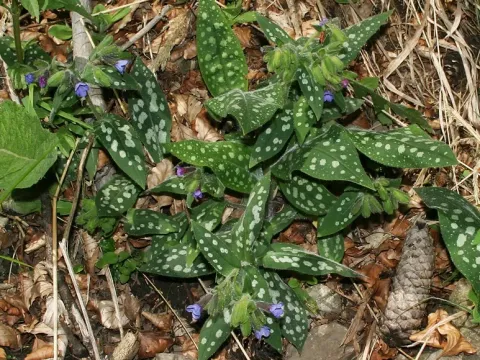
Carnic lungwort
Pulmonaria carnica
Carnic lungwort (Pulmonaria carnica) is a hardy perennial belonging to the Boraginaceae family. It is highly valued in horticulture for its early spring blooms and attractive, often spotted foliage that adds texture to shaded garden areas.
What the section contains
Carnic lungwort
This species originates from the mountainous regions of Central Europe. It is well-adapted to cool climates and thrives in shady or semi-shaded environments, making it perfect for woodland-style garden designs.
The plant demands moist, humus-rich soil that retains water well. It performs best in neutral to slightly acidic soil conditions and does not tolerate long periods of drought, which can lead to rapid wilting.
Agrotechnical maintenance includes consistent soil moisture management. During the summer, it is highly recommended to apply a layer of organic mulch, such as leaf mold or compost, to keep the root zone cool and hydrated.
Pulmonaria carnica is relatively low-maintenance once established. It does not require complex pruning, although removing spent flower stalks can encourage a tidier appearance and sometimes a modest second flush of foliage.
Powdery mildew is the most common fungal disease affecting lungworts, especially in late summer if the plants are overcrowded. Ensuring adequate air circulation between individual plants is the best preventative strategy.
Root rot is a potential risk if the soil is heavy or poorly drained. If the soil remains waterlogged for extended periods, the root system will struggle to breathe and may begin to decay.
Slugs and snails are the primary pests that damage the lush leaves. They are particularly active during damp weather and can cause significant aesthetic damage if not monitored and managed.
Aphid infestations can occasionally occur on the underside of young leaves. Gardeners should monitor the plants regularly and treat them with insecticidal soaps if the population begins to cause visible distress.
Good garden hygiene, such as removing fallen debris and thinning out older, yellowing leaves, is essential to minimize the impact of both fungal pathogens and pest harborages throughout the growing season.