
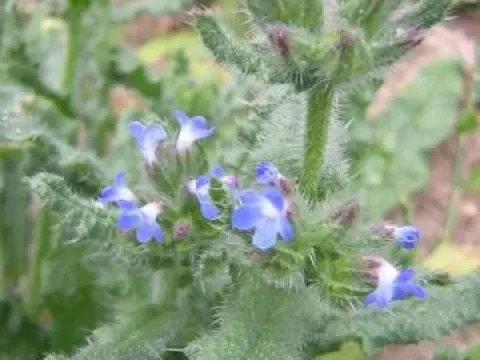
Bugloss
Lycopsis
Bugloss (Lycopsis) is a genus of flowering plants belonging to the Boraginaceae family. The most common species in agricultural and wild contexts is the field bugloss (Lycopsis arvensis).
What the section contains

Bugloss
This plant is typically grown as an annual or biennial herb, showing high adaptability to various soil types and temperate climatic conditions across Europe and Asia.
Sowing should be performed in early spring as soon as the ground is workable and has reached a soil temperature of approximately 6–8 degrees Celsius.
Standard sowing practice involves using a drill seeder at a depth of 1–2 cm, ensuring adequate seed-to-soil contact for optimal germination rates.
Uniform spacing is critical, with row widths of 30–50 cm recommended to allow for easy weed control and adequate plant development throughout the season.
Bugloss thrives in well-drained sandy or loamy soils. It has a high tolerance for poor-nutrient soils, making it an excellent candidate for marginal land development.
The plant is noted for its high drought tolerance, which is attributed to its deep taproot system, allowing it to survive periods of limited rainfall.
Full sun exposure is necessary for the plant to achieve its maximum biomass and flowering potential, as shaded areas result in leggy, weaker stems.
It prefers a temperate climate and is frost-hardy to some extent, which allows for earlier sowing compared to other heat-loving crop varieties.
While fertilization is not strictly necessary for survival, applications of potassium and phosphorus can significantly enhance seed production and overall plant vigor.
The biomass yield of bugloss can reach up to 20 tons per hectare, depending on soil quality, water availability, and the intensity of cultural practices applied.
Bugloss is highly valued as a honey plant, often cultivated near apiaries due to its rich nectar supply which sustains pollinators during the summer months.
Seed yields are typically between 300 to 500 kg per hectare, provided that harvesting is done at the correct stage of maturity to prevent excessive loss.
The plant demonstrates good regenerative capabilities after the first cut, enabling secondary growth which can be utilized as green manure or fodder.
Incorporating bugloss into crop rotation cycles is beneficial for improving soil structure and increasing organic matter content in depleted agricultural soils.
Fungal pathogens such as leaf spot and powdery mildew are the most common issues in bugloss cultivation, especially in humid or waterlogged conditions.
Insect pests including aphids and various beetle species may attack the foliage, necessitating integrated pest management strategies to protect the crop.
Root rot remains a concern in fields with poor drainage, which can lead to significant plant loss if not managed through proper site selection and furrowing.
Good agricultural practices, such as maintaining proper spacing and ensuring adequate ventilation, are the best defense against the majority of common diseases.
Pesticide use should be minimized or carefully timed, especially since the crop is highly attractive to bees and other beneficial insects throughout its blooming cycle.
Harvesting for green biomass should take place at the peak of the flowering stage, ensuring the plant contains the highest concentration of phytochemicals.
For seed production, harvesting must be executed with precision as the seeds are prone to shattering if the plant is left to dry too long in the field.
Mechanical harvesting with a combine harvester requires specific adjustments to the concave and airflow to ensure that seeds are not damaged during threshing.
Post-harvest drying is essential to reduce moisture content to approximately 12%, which prevents heating and fungal growth during subsequent storage.
Proper storage conditions, including cool and dry environments, are necessary to maintain seed viability for future sowing seasons or industrial processing needs.