
Nonea echioides
Nonea echioides
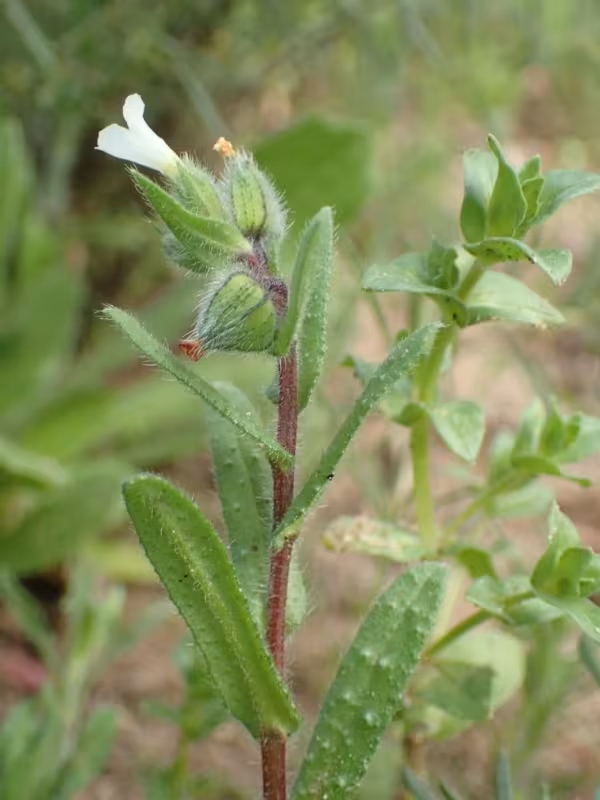
Description
Sowing dates
Sowing of Nonea echioides is mainly carried out in the spring when the soil temperature reaches 8–10 degrees Celsius. Early spring is considered the optimal time for field operations, allowing seeds to utilize winter moisture for uniform germination.
For an optimal phytocenosis, row or wide-row sowing methods are used. The seeding depth varies from 2 to 3 centimeters, depending on the soil texture and moisture level.
Under sufficient moisture conditions, Nonea forms a strong rosette of leaves within the first month after emergence. Using high-quality seed material is a critical factor, as the seeds have a hard shell and require a ripening period.
The seeding rate is calculated based on the crop's intended purpose: for seed production, plant density should be lower than when grown as a melliferous crop.
After sowing, it is advisable to roll the field to ensure better seed-to-soil contact, which promotes faster capillary moisture movement to the germination zone.
Growing requirements
Nonea echioides belongs to the Boraginaceae family and is a light-loving plant. It demonstrates high drought resistance, allowing it to be cultivated in steppe and forest-steppe zones on low-productivity lands.
The crop prefers light, well-aerated loamy or sandy loam soils. The plant is capable of tolerating temporary mineral nutrient deficiencies, although it responds positively to phosphorus-potassium fertilizers during the initial growth phases.
Climate requirements include a long frost-free period, necessary to complete the development cycle from germination to seed maturity. The crop adapts successfully to daily and nocturnal temperature fluctuations.
The soil reaction is of particular importance: Nonea develops better in neutral or slightly alkaline soils. Excessive moisture and waterlogging are detrimental to the plant's root system.
In crop rotation, Nonea is often placed as a fallow-occupying crop or a honey-producing component, contributing to improved soil structure due to its taproot system.
Yield
The productivity of Nonea echioides depends on soil fertility and plant density. In favorable conditions, green mass yield can reach significant levels for use in forage or as green manure.
Seed yield is the main indicator of the crop's effectiveness as an agricultural object. With proper agronomic practices, it is possible to obtain up to 5–8 centners of seeds per hectare of cultivated area.
The duration of flowering is an important aspect, making the crop a valuable honey plant. Honey productivity under proper management can reach 100–150 kilograms per hectare, depending on sowing density.
Yield is significantly influenced by pollinator activity. Increasing the bee population in the area during Nonea's flowering period directly correlates with an increase in seed quantity and quality.
Evaluating cultivation efficiency also includes accounting for the biomass remaining in the field after seed harvest, which can be used to enrich the soil with organic matter.
Main diseases and pests
Nonea echioides is quite resistant to major crop diseases; however, in case of excessive moisture, powdery mildew infection is possible. Prevention consists of maintaining optimal plant stand density.
Among pests, various species of weevils pose the greatest danger, damaging vegetative organs and inflorescences. In some cases, aphid damage may occur during dry periods.
Weeds create serious competition for Nonea only during the initial period of vegetation. Subsequently, the leaf rosette effectively suppresses weed development, reducing the need for herbicide application.
It is important to monitor the sanitary condition of the crops, avoiding the accumulation of pathogens in the soil through smart crop rotation. If pest populations are high, the use of approved insecticides is permissible.
Monitoring of crop status should be carried out weekly, especially during the budding phase, when the plant is most vulnerable to insect phytophages.
Harvesting
Seed harvesting of Nonea is carried out as they turn brown, as they are prone to shattering when fully ripe. The optimal method is swathing followed by combine harvesting.
When using direct combine harvesting, it is necessary to carefully adjust the drum speed to minimize mechanical seed damage. Cleaning seeds of impurities should be carried out immediately after harvest.
To ensure the safety of seed material, moisture content after drying should not exceed 12–14 percent. Storage is carried out in ventilated rooms in bags or bins.
Harvesting dates are determined by visual inspection of the inflorescences: as soon as 70–80 percent of the seeds acquire the typical coloration, harvesting operations begin.
Post-harvest field treatment includes mandatory crushing of crop residues, which serve as valuable organic fertilizer, improving the physical and chemical properties of the soil.