
Nonea pulla
Nonea pulla
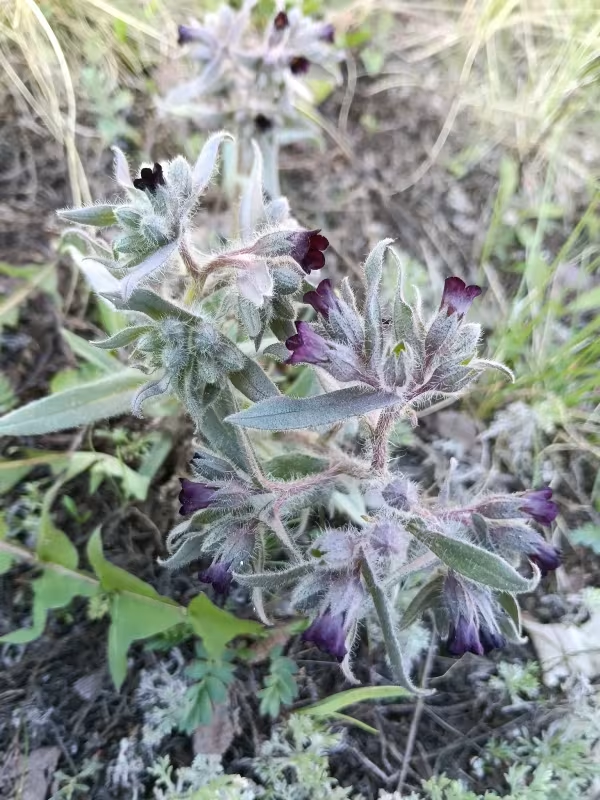
Description
Sowing dates
Nonea pulla is a perennial herbaceous plant that is typically propagated through seeds. To achieve optimal germination, sowing should occur in late autumn, allowing the seeds to undergo natural winter stratification.
If spring sowing is required, the seeds must be stratified artificially in a cool environment for several weeks before planting. Sowing is performed when soil temperatures reach at least 5-8 degrees Celsius to ensure steady seedling development.
The seeds should be sown at a shallow depth of 1-2 centimeters. Following sowing, the soil surface should be lightly compacted to facilitate moisture contact, which is essential for the germination of these relatively small seeds.
In large-scale cultivation, rows should be spaced 30 to 50 centimeters apart. This spacing allows for mechanical weed control and ensures that each individual plant has sufficient access to sunlight and nutrients.
Initial growth is slow, focusing on establishing a deep taproot and a basal rosette of leaves. During this phase, it is crucial to protect the young crop from aggressive weeds that could easily outcompete the developing plants.
Growing requirements
This species is highly drought-tolerant, making it suitable for regions with limited rainfall. Its deep root system allows it to access water reserves that are unavailable to many other agricultural crops.
Nonea pulla requires full sun exposure to flourish. While it can survive in partial shade, its biomass production and nectar quality are significantly reduced, leading to lower overall utility for honey production.
The ideal soil conditions are well-draining, light-textured soils such as sandy loams. The plant is sensitive to waterlogging, so heavy clay soils that retain excess moisture should be avoided at all costs.
The plant has modest nutritional requirements. Excessive nitrogen fertilization can be detrimental, as it promotes rapid vegetative growth at the expense of flower production, which is the primary economic goal for this crop.
It demonstrates excellent winter hardiness. In regions with severe winters, the dormant crown of the plant survives frozen ground conditions without the need for additional protective covering, provided the site is well-drained.
Yield
The economic value of Nonea pulla lies in its role as an early-season honey plant. It is highly attractive to pollinators, providing a consistent supply of high-quality nectar during the spring and early summer months.
The potential nectar yield is directly related to stand density and local environmental conditions. Healthy, well-managed fields provide a reliable source of honey that is highly prized by local beekeeping enterprises.
As a medicinal crop, the harvest yield is determined by the weight of the dried aerial parts. Harvesting at the peak of flowering ensures the highest concentration of active compounds, contributing to the quality of the raw material.
Seed production is consistent and reliable. For farmers managing their own seed stock, harvesting can be performed when the fruits have turned dark, indicating full maturity.
The multi-year lifespan of the crop provides long-term productivity without the need for annual replanting, significantly reducing labor and machinery costs over the lifetime of the field.
Main diseases and pests
High humidity and poor air circulation are the primary drivers of disease. Fungal issues, such as powdery mildew, may appear if the plants are spaced too closely or grown in poorly ventilated areas.
Root rot is a significant risk in poorly drained soils. Farmers must ensure that the site topography prevents surface water accumulation, especially during periods of heavy spring rainfall.
Insect pests, including aphids and various leaf-eating beetles, can cause localized damage. Integrated pest management (IPM) practices, focusing on early detection and biological control, are recommended for this crop.
Competition from perennial grasses can severely reduce yield. Regular maintenance and inter-row cultivation are necessary during the first year of establishment to ensure the crop becomes dominant.
- Monitor soil moisture levels constantly
- Implement proper drainage systems
- Use selective weed control techniques
- Apply IPM protocols for pest mitigation
Harvesting
For medicinal purposes, the harvest should be carried out when the plants are in full bloom. This stage captures the plant at its peak biochemical potency, maximizing the value of the final product.
After harvesting, the aerial parts must be dried in a shaded, well-ventilated location. Rapid drying at moderate temperatures is essential to prevent degradation of the plant's natural active components.
Seed harvesting should be timed carefully to minimize shattering. Frequent scouting of the field allows for precise timing, capturing the seeds just as they are ready to be collected.
Once dried, the raw material should be stored in breathable containers, such as paper or jute bags, in a cool, dark room. This prevents moisture accumulation and preserves the plant's quality for market.
By the end of the season, after the final harvest or seed collection, any remaining vegetative residue should be cleared to keep the field hygienic and reduce the risk of disease carryover to the next season.