
Nonea rosea
Nonea rosea
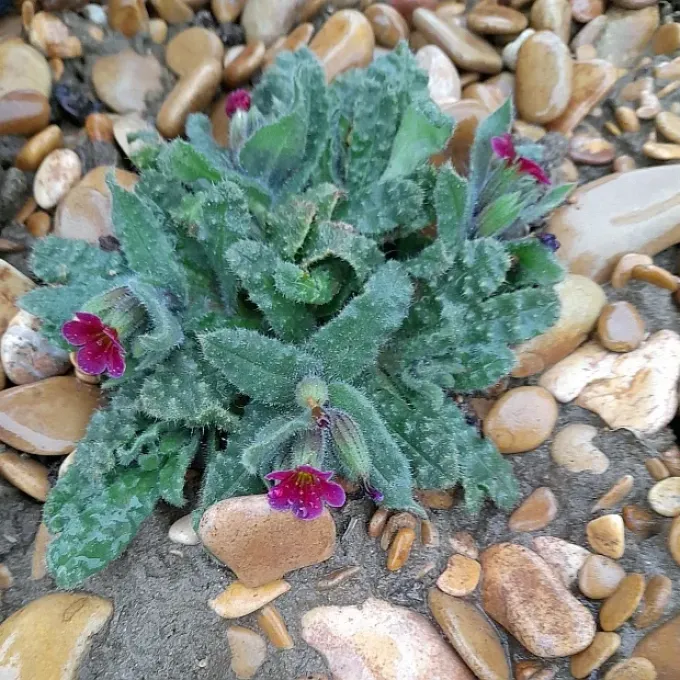
Description
Sowing dates
Seeds of Nonea rosea are sown in early spring as soon as the soil warms up to 8-10 degrees Celsius. To ensure uniform germination, the sowing depth should not exceed 1-2 centimeters, which provides the optimal balance of moisture and sunlight for the emerging seedlings.
Autumn sowing is also practiced in regions with temperate climates, allowing the seeds to undergo natural stratification. This contributes to earlier germination in the spring and encourages better root system development at the very beginning of the growing season.
The seeding rate depends on soil fertility and the primary objective of cultivation, typically ranging from 6 to 10 kilograms per hectare. It is crucial to perform soil compaction after sowing to improve the contact between the seeds and the soil particles.
To establish optimal plant density, row or narrow-row sowing methods are recommended. This facilitates mechanical field maintenance and allows for efficient weed control during the critical early stages of crop growth.
Nonea rosea demonstrates good germination energy; when temperature conditions are maintained, full emergence usually occurs within two weeks. Once the first true leaves appear, thinning should be performed if the plant density is too high for healthy development.
Growing requirements
Nonea rosea is a herbaceous plant belonging to the Boraginaceae family, preferring open, well-lit areas. It is highly drought-tolerant, making it a promising crop for regions with limited annual rainfall.
The crop prefers light, well-drained loamy or sandy soils with a neutral to slightly alkaline pH. Stagnant water is unacceptable for this plant, as it rapidly leads to root rot and significant stand loss.
The plant is well-adapted to the climatic conditions of steppe and forest-steppe zones. While it can withstand temporary cold snaps, active growth commences only during stable, warm weather with sufficient solar radiation.
To enhance productivity, it is important to apply phosphorus-potassium fertilizers during the budding stage. Nitrogen fertilizers should be used with caution to avoid excessive vegetative growth at the expense of flowering and seed formation.
Field maintenance includes regular inter-row cultivation to improve soil aeration and break the surface crust. During drought periods, Nonea responds positively to moderate irrigation, especially during the peak flowering phase.
Yield
The economic use of Nonea rosea focuses on its value as a honey plant and a source of medicinal raw materials. Its flowers are actively visited by bees, resulting in high-quality honey with unique organoleptic properties.
The biological productivity of the plant allows for a significant harvest of green mass, which can be utilized as a base for various biologically active supplements. Exact yields depend largely on the intensity of the applied agrotechnologies.
Seed harvesting is conducted at the full maturity stage, when the fruits attain their characteristic dark color. It is critical to avoid over-ripening, as seed shattering can lead to substantial losses in total harvest volume.
Post-harvest processing includes drying the seeds in well-ventilated areas or specialized dryers at temperatures not exceeding 40 degrees Celsius. This ensures long-term preservation of seed quality and viability.
Integrating Nonea into crop rotations helps rejuvenate the soil and improve its structure due to the plant's deep taproot. The crop is not nutrient-depleting and serves as an excellent predecessor for most cereal and technical crops.
Main diseases and pests
The primary diseases of Nonea rosea are fungal infections triggered by improper humidity management. Powdery mildew can affect the leaves during periods of high humidity and poor air circulation within dense stands.
Root rot represents a serious threat in heavy, waterlogged soils. Prevention consists of choosing appropriate field sites and maintaining spatial isolation from potential sources of infection.
Among pests, various species of leaf beetles and weevils pose the greatest danger by feeding on the soft tissues of the plant. In cases of mass outbreaks, these pests can significantly damage the leaf surface.
Aphids may appear during the flowering period, extracting juices from young inflorescences. Controlling them requires the use of biological agents that do not harm pollinators, as Nonea is an important honey-producing plant.
Mechanical weeding is frequently used to manage weeds during the early vegetative stage, as the use of herbicides on such crops is often restricted by environmental regulations and specific plant sensitivity.
Harvesting
The harvest of green mass for medicinal purposes occurs during the stage of mass flowering. At this point, the concentration of biologically active compounds in the aerial parts reaches its maximum, which is vital for high-quality raw material.
Mowing is recommended in the morning hours after the dew has evaporated, using mowers adjusted to the correct cutting height. This allows for the preservation of the lower stem parts and promotes secondary regrowth under favorable conditions.
Seed harvesting is performed via direct combining once the majority of the seeds reach full maturity. To minimize losses during threshing, the gap settings of the combine's threshing drum must be calibrated correctly.
After harvesting, crop residues can be incorporated into the soil as green manure, contributing to organic matter accumulation and improved microbial activity within the soil profile.
Storage of the collected raw material requires strict adherence to temperature and humidity conditions. Using paper or cloth bags is highly recommended to ensure proper ventilation of the product during storage.