
Yellow nonea
Nonea lutea
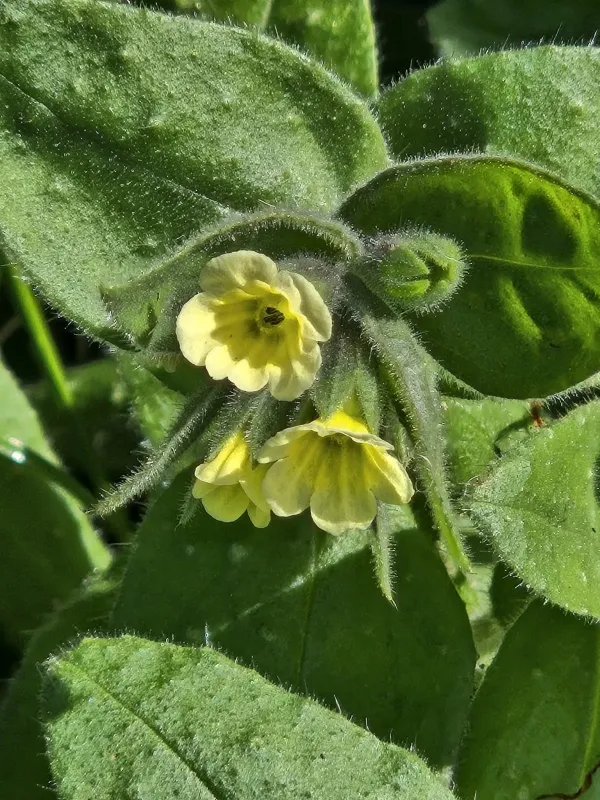
Description
Sowing dates
Yellow Nonea (Nonea lutea) belongs to the Boraginaceae family. This annual or biennial herbaceous plant is often considered an opportunistic weed in temperate climates, yet it possesses significant potential as a versatile forage or cover crop.
The seeds of Yellow Nonea demonstrate high germination energy under adequate moisture conditions. The optimal time for sowing is early spring, as soon as soil temperatures reach 5–8 degrees Celsius, as the seeds are capable of withstanding minor frost events.
When cultivated as a green manure or fodder supplement, planting is conducted via row drilling with 15–20 cm spacing. A planting depth of 2–3 cm ensures the seed makes sufficient contact with moist soil layers to encourage uniform emergence.
Autumn sowing is feasible in regions with mild winters, allowing the plant to overwinter in the rosette stage. This strategy provides an early source of green biomass at the start of the following growing season, which is highly beneficial for livestock management.
The crop exhibits rapid growth dynamics during early development. Once established, the plant quickly develops a robust root system, enhancing its overall resilience against environmental stressors throughout the growing cycle.
Growing requirements
Yellow Nonea is undemanding regarding soil fertility, though it thrives best in well-aerated loamy and chernozem soils. It performs successfully in open, sunlit areas where prolonged waterlogging of the root zone is avoided.
The plant possesses notable drought tolerance thanks to its taproot system, which is capable of reaching deeper soil horizons. This characteristic makes the crop a promising candidate for cultivation in regions with erratic rainfall patterns.
The optimal pH range for growing Yellow Nonea varies from slightly acidic to neutral. Growth is noticeably stunted in overly saline or highly acidic soils, which ultimately leads to a reduction in total phytomass production.
In intensive farming, the crop responds positively to the application of mineral fertilizers, particularly phosphorus and potassium compounds. Nitrogen applications should be managed carefully to avoid excessive vegetative growth at the expense of floral development.
Adhering to a proper crop rotation sequence is vital for success. Yellow Nonea performs best following cereal predecessors, ensuring that the soil is not overloaded with pathogens specific to other plant families.
Yield
The productivity of Yellow Nonea directly depends on the agronomic management and moisture availability during the flowering phase. Under favorable conditions, green biomass yields can reach 15–20 tons per hectare.
When utilized as a honey plant, it provides bees with nectar in early spring. Its nectar productivity makes it a valuable resource for maintaining bee colony strength before the main nectar flow begins.
Seed productivity is stable, facilitating self-sustained seed production on farms. A single specimen can produce a significant quantity of seeds, provided that optimal plant density is maintained within the field.
The biological value of the crop lies in the high protein content of its foliage prior to the flowering stage. This makes it a useful supplement for green fodder, contributing to improved productivity in agricultural livestock.
Stability of yield is ensured by the plant's high adaptability. Even under stressful weather conditions, Yellow Nonea is capable of forming a viable seed harvest, thereby minimizing the risks of total production loss.
Main diseases and pests
Common diseases for this crop include fungal infections such as powdery mildew and various leaf spots, which typically appear under conditions of excessive moisture. Prevention is achieved by adhering to agronomic norms regarding planting density.
Among pests, weevils and certain leaf beetle species pose the greatest threat, as they damage the leaf surface during the active growth period. Controlling pest populations is handled through timely preventive treatments.
- Powdery mildew (Erysiphaceae)
- Leaf rust
- Weevils (Curculionidae)
- Cruciferous flea beetles (in adjacent areas)
- Slugs during the emergence period
Damage caused by insect herbivores is generally not critical but requires intervention during outbreaks. Utilizing biological control methods is preferred over chemical interventions when the crop is destined for livestock consumption.
Root rots can affect the stands if the water regime is mismanaged. Ensuring proper field drainage and preventing standing water are key protective measures against these soil-borne pathogens.
Harvesting
Harvesting for green biomass is best performed at the beginning of the flowering phase, when the concentration of nutrients in the stems reaches its peak. This ensures the production of high-quality silage or hay for livestock needs.
When harvesting for seed, monitoring the maturity of the seed pods is crucial. Harvesting is conducted using swathing or direct combining when the majority of seed heads have turned brown to minimize losses from shattering.
Post-harvest seed processing includes drying and cleaning to remove plant debris. Yellow Nonea seeds maintain high viability when stored in controlled humidity conditions, allowing them to be kept for future seasons.
To preserve soil fertility, the remaining stubble should be incorporated into the soil post-harvest. This process returns organic matter to the earth and contributes to improving the structure of the topsoil layer.
Mechanized harvesting does not require specialized equipment. Standard mowers and grain combines with correctly adjusted cylinder gaps effectively handle the processing of this crop.