
Glandora diffusa
Glandora diffusa
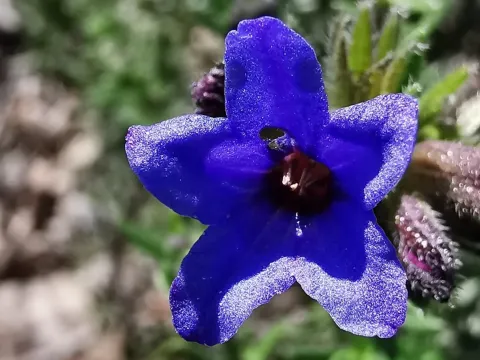
Glandora diffusa is a low-growing evergreen perennial belonging to the Boraginaceae family, widely appreciated for its intense blue floral display.
What the section contains
Glandora diffusa
Originally native to Southern and Western Europe, this plant is perfectly adapted to rocky habitats and alpine-like conditions where drainage is excellent.
Botanically, it forms dense mats or small bushes, featuring hairy, narrow leaves that remain green throughout the dormant winter season.
The cultural success of Glandora depends heavily on soil composition, which must be acidic or neutral, well-draining, and relatively lean in nutrients.
It thrives in full sun to partial shade, requiring a climate that provides moderate cooling while maintaining sufficient light intensity for bloom production.
The primary threat to the longevity of Glandora diffusa is root rot, which is almost exclusively caused by poorly drained soils and excessive moisture retention.
In humid or stagnant environments, the foliage can also fall victim to powdery mildew or other fungal pathogens that thrive in restricted air circulation.
While relatively pest-resistant, the plant can occasionally suffer from infestations of aphids, particularly during the active spring growth phase.
To mitigate these risks, it is essential to mulch the base of the plant with inorganic grit or small gravel to keep the foliage away from soil moisture.
Regular maintenance involves checking for dead material and ensuring that the plant is not being overgrown by more vigorous neighbors in a landscape setting.