
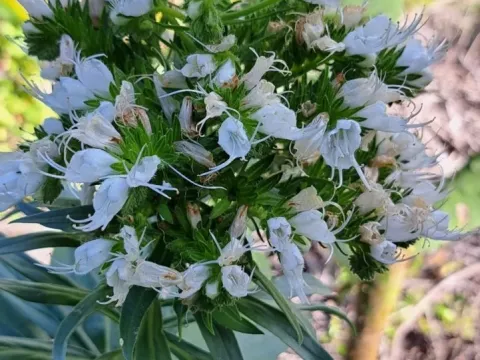
Giant Viper's Bugloss
Echium giganteum
Echium giganteum, commonly known as Giant Viper's Bugloss, is a large perennial species belonging to the Boraginaceae family, native to the Canary Islands. In agricultural practice, this species requires specific conditions as it is a heat-loving plant that cannot survive moderate frosts.
What the section contains
Giant Viper's Bugloss
Sowing the seeds of Echium giganteum is recommended to be carried out in protected ground or greenhouses in late winter or early spring. This allows for the necessary temperature regulation for successful germination, as the seeds require stable warmth.
Once the risk of night frost has passed, seedlings are transplanted to their permanent location. It is important to follow a planting scheme that leaves sufficient space between the plants, considering their ability to branch actively and reach impressive sizes.
Direct sowing into open ground is only possible in regions with a mild, subtropical climate. When sowing directly, it is necessary to provide high-quality seedbed preparation and ensure a planting depth of no more than 1–2 centimeters.
For optimal development, the soil should be cleared of weeds and enriched with organic matter before sowing. Proper site preparation is key to ensuring high germination energy and active growth of the plant's aerial parts.
Echium giganteum has high light requirements, preferring open areas with direct sunlight throughout the day. In the shade, the plant becomes leggy, loses its decorative value, and significantly reduces its nectar production.
The crop is demanding regarding soil conditions, preferring light, well-drained substrates. Waterlogging in the root zone is fatal for this species as it triggers the rapid development of root rots.
The plant adapts well to poor soils, although it shows maximum productivity on fertile loams. The optimal soil pH level for the viper's bugloss is in the neutral or slightly alkaline range.
The plant possesses high drought resistance, which is due to the structure of its leaves, which can effectively retain moisture. Nevertheless, during periods of active growth and flower stalk formation, moderate watering positively affects the volume of vegetative mass.
The main limiting factor in regions with temperate climates is temperature. Echium giganteum is critically sensitive to freezing temperatures, so its cultivation in open ground requires protection or growing it as an annual crop.
The main agricultural value of Echium giganteum lies in its exceptionally high nectar productivity, making it one of the most valuable honey plants for beekeeping. During the flowering period, it attracts a huge number of pollinators.
The amount of nectar produced depends directly on the plant's access to moisture and the temperature regime. Under favorable weather conditions, one plant can provide resources for bees for several weeks.
The seed yield of the culture can also be significant, but it requires timely harvesting before mass shedding begins. The seeds are characterized by high germination rates if storage conditions and pre-sowing preparations are followed.
The green mass of the plant is rarely used in industrial scales, more often as a green manure or an additional component for soil improvement in regions where the climate allows for full development throughout the season.
To maximize nectar collection, agronomists recommend placing crops in areas protected from strong winds, which facilitates the work of bees and contributes to longer preservation of nectar in the flowers.
The main danger for Echium giganteum is fungal diseases caused by excessive moisture and stagnant air. Powdery mildew can affect the leaves during periods of high humidity.
Root rots are a serious risk when irrigation agrotechnics are violated or when choosing unsuitable areas with heavy clay soil. Upon detection of early symptoms, it is necessary to reduce watering and apply fungicides.
Common pests on Echium crops include aphids and spider mites, which develop actively during dry, hot weather. These insects not only suck sap but also carry viral diseases that weaken the plant's immunity.
For pest control, it is recommended to use biological protection methods, especially if the crop is grown near apiaries. The use of insecticides must be strictly limited to periods when bee activity on the flowers is minimal.
Disease prevention consists of crop rotation, timely removal of plant residues, and ensuring good air circulation between plants. Planting density should be optimal to prevent the spread of pathogens.
Harvesting seeds of Echium giganteum is carried out after most of the inflorescences have turned brown. It is important to harvest in dry, sunny weather to prevent decay of the collected material.
Since seed ripening occurs unevenly, selective harvesting of inflorescences as they darken is recommended. This allows for the collection of the highest quality seed material with high germination energy.
After harvesting, inflorescences are left to dry in a ventilated area, after which they are threshed. It is important to clean the seeds of plant debris to avoid spoilage during long-term storage.
Seeds should be stored in paper bags or cloth pouches in a dry, cool place. If humidity and temperature conditions are met, viability can be maintained for several years.
If the viper's bugloss is used as a honey plant, harvesting in the traditional sense is not the priority, as the main product — honey — is collected by bees directly during the flowering process.