
Glandora oleifolia
Glandora oleifolia
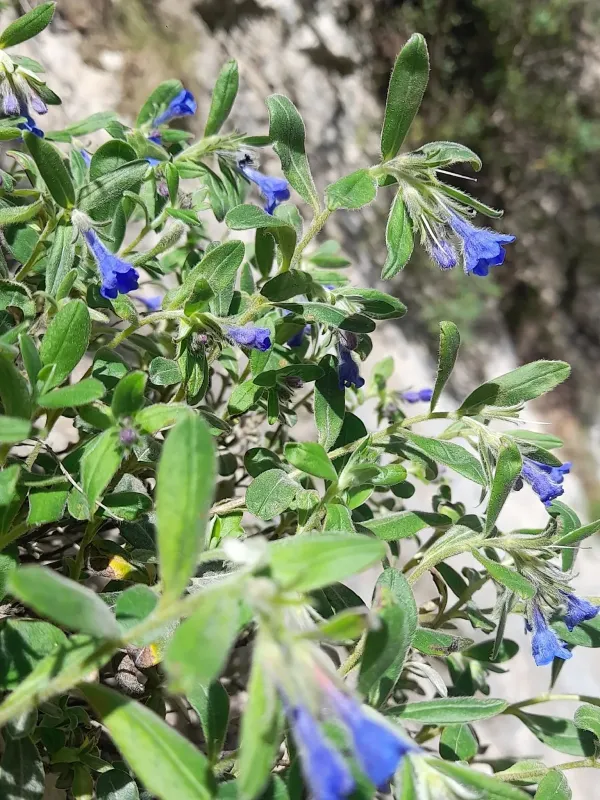
Description
Growing requirements
Glandora oleifolia is a perennial subshrub belonging to the Boraginaceae family. It is distinct for its evergreen foliage that closely resembles that of an olive tree, which serves as a protective adaptation in its harsh, mountainous native environment in the Pyrenees.
The plant originates from the mountainous regions of Spain, thriving in crevices and rocky slopes. Its natural habitat is characterized by poor, rocky soils and high exposure to sun, which has shaped its morphology to be both drought-tolerant and slow-growing.
Regarding climatic requirements, the plant prefers Mediterranean-like conditions. It requires high light intensity for optimal growth and flowering. While it is hardy, it does not tolerate high humidity combined with low temperatures, which can be detrimental to its evergreen structure.
Soil management for Glandora oleifolia is straightforward but demanding regarding drainage. The plant thrives in alkaline or neutral substrates that are gritty and free-draining. It is essential to avoid dense or waterlogged soils, as root rot is the most common cause of failure in cultivation.
In terms of хозяйственное (economic) use, the species is primarily valued as an ornamental plant. It is highly regarded by alpine plant enthusiasts and landscape designers for its deep blue or violet flowers, making it an excellent candidate for rock gardens, dry walls, and specialized xeriscaping.