
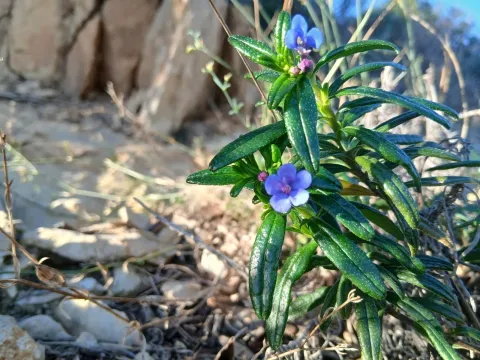
Glandora
Glandora
Glandora is a genus of perennial plants belonging to the Boraginaceae family. These plants are native to the Mediterranean region, where they thrive in rocky terrains and open sunny environments.
What the section contains
Glandora
Botanically, Glandora is characterized by its woody base and dense, low-growing habit. Its leaves are typically small, evergreen, or semi-evergreen, often covered with fine hairs that provide drought resistance.
The climate requirements for Glandora focus on mild winters and warm, sunny summers. While some species are hardy, they generally perform best when protected from extreme freezing temperatures and harsh winds.
Soil conditions are critical for the health of this crop. The plants demand well-drained, porous soils. Heavy clay soils must be amended with grit or sand to prevent moisture retention near the roots.
Agronomic practices for Glandora involve full sun exposure. It is highly intolerant of shade, which leads to weak growth, loss of foliage density, and reduced flowering performance during the season.
The primary threat to Glandora is root rot, which is almost exclusively caused by poor drainage and waterlogging. Once the roots are compromised by moisture, the plant is difficult to recover.
Pests such as slugs and snails are frequent visitors to young Glandora plantings. They feed on the succulent tips, potentially stunting growth if left unchecked during the early development phase.
Preventative measures include maintaining a dry mulch layer, such as stone chippings, around the collar of the plant to keep the stems and leaves away from wet soil.
Regular sanitation, such as removing dead twigs and debris around the base, helps maintain airflow and reduces the risk of fungal outbreaks in humid weather.
If chemical intervention is necessary, gardeners should select specific fungicides targeting soil-borne pathogens, applying them carefully to the soil rather than the foliage to ensure maximum efficacy.