
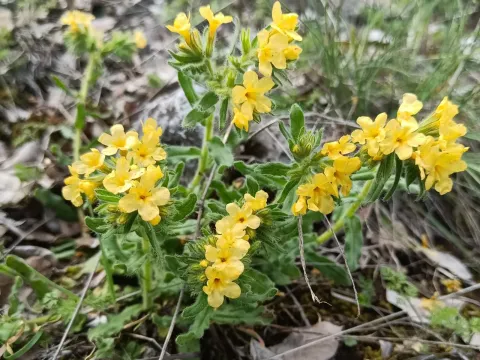
Alkanna primuliflora
Alkanna primuliflora
Alkanna primuliflora, a member of the Boraginaceae family, is a specialized perennial herb that thrives in harsh mountain environments. Its unique adaptation allows it to flourish in soils that are typically considered suboptimal for common agricultural crops.
What the section contains
Alkanna primuliflora
The primary requirement for this species is a highly permeable, stony, or sandy substrate. Adequate drainage is essential, as the plant is extremely susceptible to root rot and other moisture-related disorders that occur in heavy or compacted soils.
Light intensity is another critical factor for healthy growth. Being a heliophilous species, it requires full sun exposure throughout the day to support its physiological processes and encourage the production of secondary metabolites in its root system.
Botanically, Alkanna primuliflora is characterized by its distinct primrose-like basal rosette, which provides structural stability and protection against extreme climate conditions. This unique architecture is a hallmark of the species' evolutionary history.
Economically, the plant is valued for the rich pigments present in its roots, which are used as organic dyes in both food processing and cosmetics. The industry focuses on the sustainable harvesting of these roots to extract natural coloring agents.
Root rot caused by stagnant water is the most severe threat to Alkanna primuliflora, often leading to rapid plant mortality in poorly managed environments.
Aphids are recognized as the primary insect pests, frequently targeting tender leaves and stems, which can weaken the plant and stunt its development significantly.
Powdery mildew represents a major fungal threat in environments with poor air circulation and elevated humidity, necessitating proactive fungal management strategies.
Garden pests like slugs and snails may damage the emerging growth in early spring, requiring physical barriers or organic pest control methods to protect the young plants.
Consistent monitoring and maintaining a dry, well-ventilated growing area remain the best practices for preventing disease outbreaks and ensuring high crop quality.