
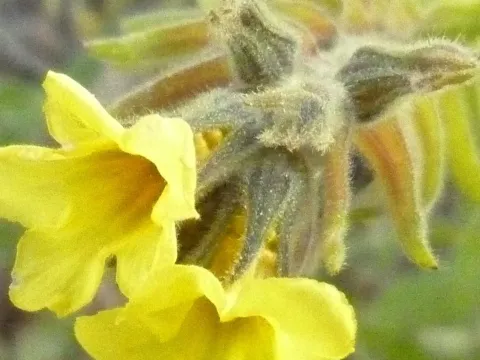
Alkanna calliensis
Alkana calliensis
Alkanna calliensis is a perennial herbaceous plant belonging to the Boraginaceae family. This species is native to rocky and arid habitats in the Eastern Mediterranean, exhibiting significant evolutionary adaptations to survive in nutrient-poor, dry environments.
What the section contains
Alkanna calliensis
Botanically, the plant is distinguished by a deep, woody taproot system, which is its most valuable morphological feature. The stems and leaves are typically covered with trichomes, which help reduce transpiration and protect the plant from harsh direct sunlight.
In terms of growing requirements, the plant thrives in well-drained, calcareous, or stony soils. It is highly intolerant of waterlogging, which often leads to root rot; therefore, selecting an appropriate site with excellent natural drainage is the most critical factor for success.
This species is a heliophyte, meaning it requires full sun exposure to maintain its physiological health. Its slow growth rate makes it susceptible to weed competition during the establishment phase, necessitating careful site preparation before sowing.
A specific agricultural approach involves avoiding excess nitrogen fertilization, as this encourages vegetative growth at the expense of root development. The focus in cultivation should be on creating conditions that mirror its natural, harsh environment to ensure high-quality yields.
The primary agricultural utility of Alkanna calliensis is the extraction of alkannin and its derivatives from the roots. These substances serve as high-quality natural red pigments used widely in the food, cosmetic, and pharmaceutical industries.
Harvesting is usually performed on two-to-three-year-old plants to ensure that the concentration of pigments in the bark of the roots has reached its peak. The process involves mechanical or manual lifting of the roots from the soil without damaging the main structure.
Post-harvest processing requires rapid cleaning and drying of the roots. Exposure to direct UV light and high heat must be minimized during this phase, as the pigment compounds are sensitive and can degrade, significantly reducing the market value of the batch.
Industrial applications include the production of oil-based extracts. These extracts are highly sought after by organic cosmetic manufacturers for their ability to provide stable color and mild soothing properties in formulations like lip balms and skin salves.
Future potential for this crop lies in its ability to utilize degraded lands where intensive agriculture is not viable. By developing standardized propagation methods, farmers can tap into the growing global market for natural plant-based dyes.